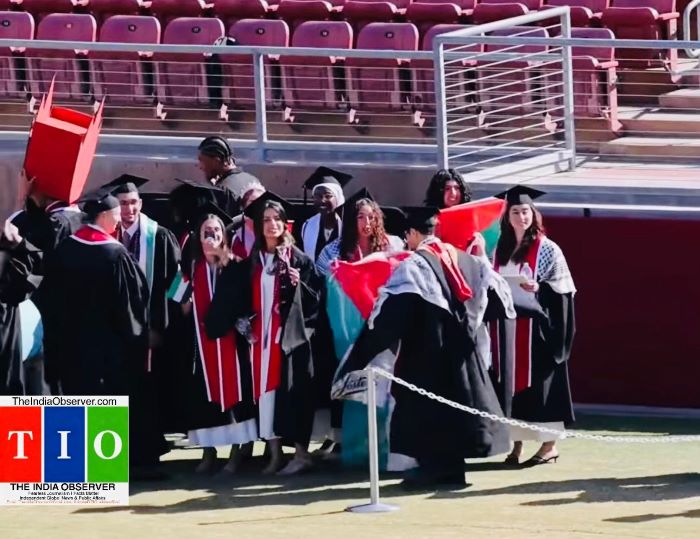
Hundreds of Stanford Graduates Walk Out During Google CEO Sundar Pichai’s Commencement Address Over Gaza Protest
Share, Comment, Like, and Subscribe to support Independent Journalism. Fearless Journalism. Facts Matter!
By Adam Rizvi | Editor-in-Chief, The India Observer (TIO): Stanford, California –Approximately 200 students reportedly staged a walkout during Stanford University’s commencement ceremony on Sunday as Google and Alphabet CEO Sundar Pichai took the stage to deliver the keynote address.
Key facts
- What: ~200 Stanford graduates walked out during the commencement ceremony
- When: Sunday, June 15, 2026
- Who: Google and Alphabet CEO Sundar Pichai was delivering the keynote
- Why: Protest over Google’s business ties with Israel, including the Project Nimbus cloud contract, amid the war in Gaza
- Organizers: Students for Justice in Palestine and No Tech for Apartheid
- Pichai’s response: Declined to comment when asked by a BBC journalist
According to reports by SFGate and videos circulating on social media, students dressed in graduation robes held Palestinian flags, wore traditional keffiyehs, blew whistles, and displayed banners before walking out of the ceremony in protest.
Read, Comment, share: California Democratic Party Adopts Historic Platform Language Affirming Palestinian Human Rights and Statehood
The demonstration was reportedly organized by Students for Justice in Palestine and No Tech for Apartheid, groups that have criticized Google’s business relationships with the Israeli government and U.S. federal agencies.
Several banners referenced Project Nimbus, a cloud computing contract between Google and the Israeli government that provides cloud services to various Israeli ministries, including defense-related agencies. The project has become a focal point of criticism among pro-Palestinian activists and some Google employees who argue that technology companies should not be involved in military-related contracts.
Read, Comment, share: Palestinians Want Peace: Will Netanyahu Agree on Terms Acceptable To Hamas?
Following the ceremony, a BBC journalist reportedly asked Pichai for his reaction to the protest, but the Google CEO declined to comment.
Unlike some recent commencement speeches by technology executives that have focused heavily on artificial intelligence (AI), Pichai largely avoided discussing AI. Instead, he spoke about his own educational journey, personal experiences, and lessons learned throughout his career.
Read, Comment, share: New Poll Shows Gaza and U.S. Military Aid to Israel as Major Issue for Democratic Primary Voters in Virginia
The incident reflects the continuing tensions on U.S. college campuses over the Israel-Gaza conflict and growing scrutiny of major technology companies’ relationships with governments and defense institutions. Universities across the United States have witnessed numerous demonstrations over the past year as students increasingly demand greater corporate accountability and transparency regarding technology contracts linked to military operations.
As debates over free speech, campus activism, and corporate ethics continue, the Stanford walkout underscores how the Israel-Gaza conflict remains a deeply polarizing issue among young Americans and within the global technology community.
Read, Comment, share: No Dates to Break the Fast in Gaza!
Read, Comment, share: Columbia University President Resigns After Gaza Protests Turmoil
Read, Comment, share: Columbia Professor and NYPD Intelligence Director Leads Crackdown on Student Protesters
For more South Asian and global news coverage, visit: TheIndiaObserver.com
Read the full story and more updates at The India Observer.
Frequently asked questions
Q: Why did Stanford graduates walk out during Sundar Pichai’s speech?
A: They were protesting Google’s business relationships with the Israeli government, including the Project Nimbus cloud contract, amid the war in Gaza.
Q: How many students walked out?
A: Approximately 200, according to SFGate and videos circulating on social media.
Q: What is Project Nimbus?
A: A cloud computing contract between Google and the Israeli government that provides cloud services to various Israeli ministries, including defense-related agencies.
Q: Who organized the walkout?
A: Students for Justice in Palestine and No Tech for Apartheid.
Q: How did Sundar Pichai react?
A: He declined to comment when a BBC journalist asked him about the protest after the ceremony.
Support independent journalism by sharing this article, commenting on the issue, and subscribing for future coverage.
Have a story, event, or issue to report? report?
Email your press release or tip to TheIndiaObserver@gmail.com— TIO covers news that matters. @AdamRizviTIO
Source: Reports by SFGate, BBC, Breakthrough News, and information circulating on social media. Readers are encouraged to follow official statements from Stanford University and Google for further developments.