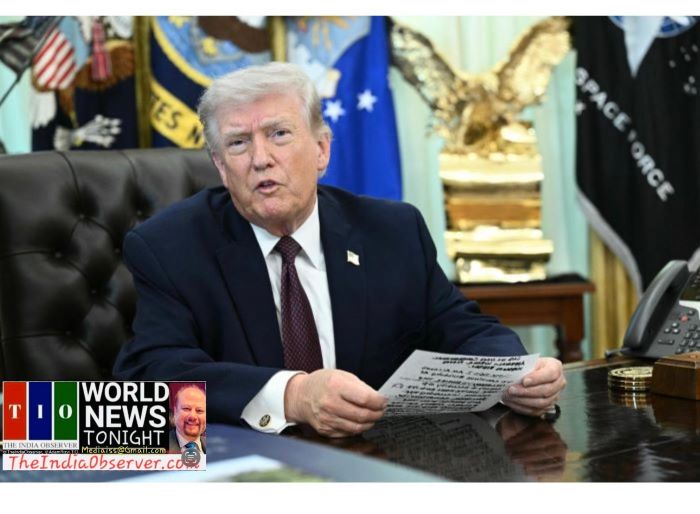
Trump Iran Strategy Enters High-Stakes Phase
Share, Comment, Like, and Subscribe to support Independent Journalism!
By Adam Rizvi | Editor-in-Chief, The India Observer (TIO): WASHINGTON — President Donald Trump has rejected Iran’s demand for compensation for damage caused during the conflict, as efforts to reach an understanding over the future of the strategically important Strait of Hormuz remain unresolved.
Iran has linked the reopening of the waterway to a series of conditions, including compensation for damages, an end to U.S. sanctions and military pressure, and arrangements governing future shipping through the strait.
Also Read: Trump Iran Strategy Enters High-Stakes Phase as Talks and Pressure Continue
Trump, responding Monday, dismissed Tehran’s demand for U.S. compensation and instead said Iran should compensate Americans affected by actions attributed to Tehran and Iranian-backed forces.
The exchange highlights how far apart Washington and Tehran remain even as both sides continue to discuss arrangements that could restore more predictable commercial shipping through the Strait of Hormuz.
The Strait of Hormuz is one of the world’s most important energy corridors. Its continued disruption has affected shipping, energy markets and the cost of transportation well beyond the Middle East.
In recent days, Trump had indicated that an agreement concerning the strait could be close. U.S. Secretary of State Marco Rubio also said progress had been made in discussions involving Oman, although no final agreement had been reached.
Iran, however, has continued to insist that Washington must take steps first before the waterway can return to normal commercial operations.
Iranian Foreign Minister Abbas Araghchi said Monday that Tehran and Washington are not engaged in direct negotiations and that direct talks would not resume while Iran believes the United States is violating existing understandings. Iran has also been working with Oman on a proposal for new shipping arrangements through the strait.
While diplomatic efforts continue, the Trump administration is increasingly emphasizing economic pressure on Tehran.
The objective appears to be using sanctions and economic leverage to push Iran toward an agreement rather than immediately seeking another major military escalation.
That approach presents Trump with a difficult diplomatic calculation: maintaining pressure while leaving enough room for negotiations to produce an agreement.
The immediate question is whether Washington and Tehran can bridge their differences over sanctions, compensation and shipping arrangements.
Also Read: How will the Iran War come to an End?
For the international community, the reopening and stabilization of the Strait of Hormuz remains particularly important because prolonged disruption could continue to affect energy supplies, shipping costs and the wider global economy.
For now, diplomacy remains possible, but the latest exchange between Trump and Tehran shows that significant obstacles remain.
The India Observer will continue to follow developments as negotiations and efforts surrounding the Strait of Hormuz unfold.
Source note: This report is based on current reporting from Associated Press, Reuters and other published sources.
Editor’s Note:
The India Observer reports on developing international events using information available from public statements and established news sources. Details may change as diplomatic discussions continue.
Also Read: Is The Economist Cover Still Valid: Advantage Iran
Support independent journalism by sharing this article, commenting on the issue, and subscribing for future coverage.
Have a story, event, or issue to report?
Email your press release or tip to TheIndiaObserver@gmail.com— TIO covers news that matters. @AdamRizviTIO
The India Observer (TIO)
Fearless Journalism. Facts Matter.
© 2026 The India Observer. All rights reserved.