Monday Musings: Does Partition Have a Closure or Love?
Share, Comment, Like, and Subscribe to support Independent Journalism!
By Amitabh Srivastava| Editor-in-Chief, The India Observer (TIO): Imtiaz Ali’s latest masterpiece, Main Vaapas Aaunga, could not have come at a better time for a theatrical release.
Based on the trauma of the 1947 India-Pakistan Partition, like so many earlier films, novels, and serials (Buniyaad being among the most watched), one could not imagine what more remained to be said, seen, or heard on this theme.
Frankly, my main reason for going to the theatre in the scorching summer of 2026 to watch this film was a recent interview with actor Manoj Bajpayee, in which he said that Naseeruddin Shah and Om Puri were among the best actors in the world.
Also Read: Movie ‘HAQ’, based on the Shah Bano Case, Sparks Controversy
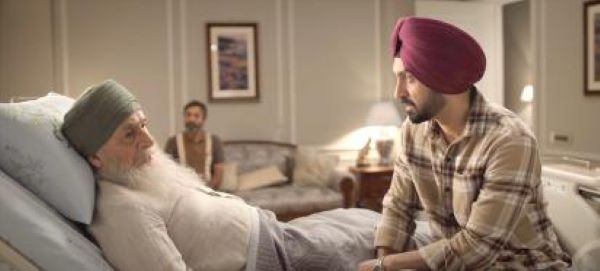
And what a performance by the 75-plus actor, who is bedridden and can only mumble incoherently throughout the film, troubled by the ghosts of the pre-Partition days that his perpetual dementia cannot exorcise.
The politics of Partition continues to be woven through the lives of Indians, Pakistanis, and Bangladeshis, even after 78 years. Bangladesh itself was created following the division of Pakistan in 1971.
Imtiaz Ali’s film, however, takes the seemingly impossible premise of “closure,” as they call it in business parlance, as an ideal solution.
It is not the first time that writers, poets, and filmmakers have attempted to find closure—a closure of hostilities, war, and bitterness between Hindus, Muslims, and Sikhs.
To move on, as they say in Gen Z language.
But the recent elections in the Indian states of West Bengal and Assam, in particular, have proved that rhetoric about cross-border terrorism, illegal migrants, detention camps, and deportations remains the order of the day, not closure.
Thankfully, Imtiaz Ali is not a politician.
He is a filmmaker who yearns for love in all its dimensions, and this yearning runs through all his films.
Also Read: Censor Board of India is flagging the RSS ideology in releasing the film ‘Haal’
Here too, he focuses on the closure of a tender love story between a young Keenu (Naseeruddin Shah) and Afsana (Sharvari Wagh), which began in a village at a time when people lived as human beings, not as Hindus, Muslims, or Sikhs.
When the young couple realizes that their elders may not agree to their marriage because of rising animosity, they even discuss getting married in a church.
But the gods—and the humans who claim to speak for them—have other plans.
Keenu, who had vowed never to leave Afsana in Sargodha (now part of Pakistan), is tossed and pushed by circumstances into moving to India.
Also Read: Intermission in the horror movie
Now, as he lives on oxygen support and slips into dementia, his family members seem to be waiting only for his final departure.
Ultimately, it is left to his grandson, played by Diljit Dosanjh, who returns from London to fulfill his grandfather’s last wish: to go to Sargodha and meet the love he imagines is still waiting for him in a church.
Through Diljit Dosanjh (who, incidentally, is himself an NRI), Imtiaz Ali presents his theory that unless a human being finds closure from feelings of pain, love, or passion, those emotions turn into poison.
Much of the film is consumed by this search, even as Diljit wonders aloud how anyone could remain obsessed with the love of someone he has neither seen nor heard from for 78 years.
Also Read: Kamal Amrohi, the legendary filmmaker
We do not know whether he gets his answer.
But the filmmaking of Imtiaz Ali and the music of A.R. Rahman make the search worthwhile.
Read the full story and more updates at The India Observer.
Support independent journalism by sharing this article, commenting on the issue, and subscribing for future coverage.
Also Read: Censor Board of India is flagging the RSS ideology in releasing the film ‘Haal’
Have a story, event, or issue to report?
Email your press release or tip to TheIndiaObserver@gmail.com— TIO covers news that matters. @AdamRizviTIO
Also Read more from this Author: Monday Musings: ‘Prayas’ Rose Like a Phoenix from the Ashes
Curated by Humra Kidwai