Monday Musings: Feminism Is Out, Realism Is In
Share, Comment, Like, and Subscribe to support Independent Journalism!
By Amitabh Srivastava| Editor-in-Chief, The India Observer (TIO): The great Indian feminism circus has run its full circle, or so it appears.
It was a strange scenario.
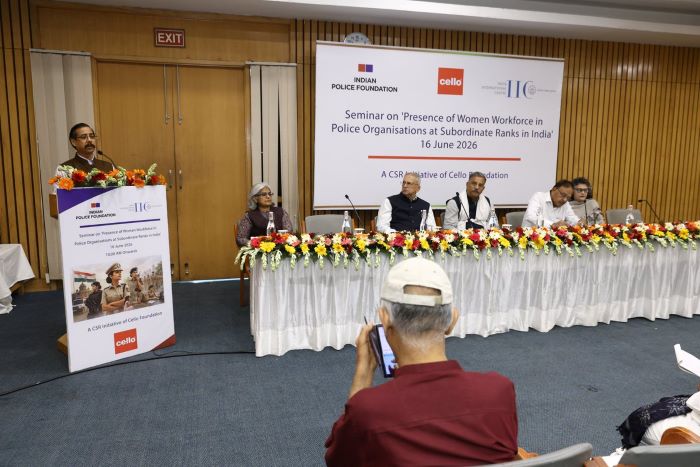
At a recent seminar held to highlight the problems faced by women in performing their duties in the police and paramilitary forces, while the senior officers on the dais appeared genuinely concerned—if not somewhat condescending—towards their problems, almost every woman from the Police, BSF, and Forensic Science Department in the audience seemed to be saying, “Thanks, but no thanks.”
This was not a sarcastic response. It was expressed with complete sincerity and reflected a certain apprehension among these women about the unintended consequences of concessions and reservations being offered in their favour.
It takes me back to a similar programme I attended about five years ago, where the theme was almost the same: Why is the percentage of women joining the police force not going beyond 12–13 per cent despite a target of 33 per cent set by successive governments?
The seminar, organised by the Indian Police Foundation this Tuesday at the India International Centre on the theme, “Presence of Women Workforce in Police Organisations at Subordinate Ranks in India,” featured eminent speakers such as G.K. Pillai, former Home Secretary; Amod K. Kanth, former Director General and founder-mentor of NGO Prayas; S.P. Singh, Treasurer of the India Police Foundation; and Ms. Nuzhat Hassan, former Director General of Home Guards, among others.
While, in the earlier programme, women police officers at the highest levels highlighted issues such as the lack of women’s toilets, changing rooms, and punishing working hours, this time, in 2026, many women appeared uncomfortable whenever speakers on the dais discussed new concessions aimed at providing a level playing field for women, particularly in police organisations.
Also Read: Four women among 10 Muslim change-makers in Tamil Nadu
Setting the tone, Mr. Pillai mentioned the example of Dr. Kiran Bedi, his 1972 batchmate, who was reportedly offered direct entry into the IAS by the UPSC Board but refused any special favour.
She chose to join the IPS and face challenges such as the lack of women’s facilities head-on, eventually becoming the first woman IPS officer in the country. Mr. Pillai noted with satisfaction that issues such as women’s toilets, changing rooms, and crèches—once viewed as special privileges—are now mandatory requirements.
He also disclosed that after it was observed that victims who filed complaints under POSH often resigned despite being vindicated, a new policy was introduced under which the head of HR could also be held accountable if a victim resigned because the workplace environment remained unconducive.
Also Read: Monday Musings: Dangerous Portends on Women’s Day
Mr. Amod K. Kanth, drawing on 38 years of experience with Prayas and allied organisations, asserted that whether women constituted 13 per cent or 33 per cent of the police force, they remained central to the social sector because they handled issues concerning women and children across the country.
However, when women representatives were handed the microphone to discuss their challenges and experiences of battling adversity and patriarchy—particularly the struggle to balance married life with night duties—the common refrain was that the more laws favouring women were introduced, the greater their fear that such measures could eventually backfire.
For instance, when Mr. Pillai revealed that HR heads could face consequences if POSH complainants resigned, there was no enthusiastic applause.
Also Read: Has the Haryana Women’s Commission Abandoned Its Mandate for Political Optics?
The silence was broken by a woman sitting beside me, who cautiously pointed out that such regulations had already made some corporates hesitant to recruit women. Many others nodded in agreement.
We are also familiar with judicial observations made when demands for three-day menstrual leave were raised.
A senior supervisor recounted how, when she assigned a woman employee to a night shift alongside male colleagues, the employee broke down in tears, fearing it would damage her marriage. She eventually agreed to the assignment, but the supervisor noted that night duties remained a sensitive issue for many married women because some husbands feared their wives might develop extramarital relationships.
Also Read: International Women’s Day and the Shehzori Dream
Yet the overall tone of the discussion suggested that many women felt almost guilty about raising complaints, even while acknowledging that they often had to put in 150 per cent effort where men were expected to give 100 per cent simply to prove themselves worthy of their position and salary.
Perhaps the most interesting outcome of the seminar was that while some women argued that even six months of maternity leave was insufficient following childbirth, others suggested that similar leave benefits should be extended to men, who share equal responsibility in raising a family.
Whether inspired by the example of Kiran Bedi breaking the glass ceiling in 1972, or by the numerous stories of women’s empowerment showcased in cinema and OTT platforms, many women at the programme argued that after years of advocating for women’s rights, it was now time to think of men as equals by extending greater support and facilities to them as well.
Also Read: Monday Musings: Women take over Prayas and no one minds
“Many male employees feel they become substitutes for women who go on extended maternity leave and are forced to shoulder double duties. This creates rivalry and unpleasantness, and the government must address it for the sake of better policing,” said a senior woman officer.
Also Read more from this Author: Monday Musings: What About the Right to Live with Dignity?
Curated By Humra Kidwai