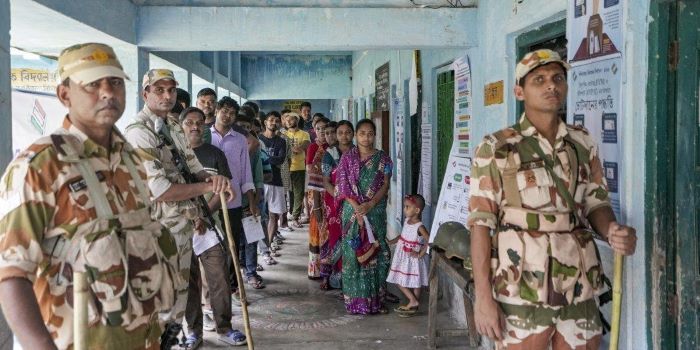
West Bengal Election Results Draw National Attention as Critics Question Role of Election Authorities
Share, Comment, Like, and Subscribe to support Independent Journalism!
By Adam Rizvi | Editor-in-Chief, The India Observer (TIO): “The West Bengal assembly election has become one of the most politically charged contests in India, with critics alleging institutional bias while supporters of the central government strongly rejecting those claims.”
As vote counting begins in the high-stakes assembly elections in West Bengal, political analysts and commentators across India are closely watching the results amid a heated national debate over the conduct of election authorities.
Also Read: Can Mamata Banerjee Win a Fourth Term? West Bengal Election Battle Intensifies
According to commentary and reporting published by The Wire, several prominent writers and political observers have raised concerns about the electoral process, voter verification exercises, and the role of national institutions during the campaign.
Former bureaucrat and former Rajya Sabha member Jawhar Sircar wrote in an op-ed that the elections in West Bengal have become one of the most closely scrutinized political contests in recent years.
Sircar, who previously served as Chief Electoral Officer of West Bengal and oversaw multiple elections, argued that the process surrounding voter verification and electoral administration raised serious concerns about the possible disenfranchisement of voters.
Also Read: Hundreds of Indian Civil Society Leaders Accuse
His article described scenes of citizens standing in long queues in extreme heat to confirm their voter eligibility, calling the situation troubling for a democracy that prides itself on universal voting rights.
The West Bengal election has largely been viewed as a fierce contest between the ruling state party, the All India Trinamool Congress led by Chief Minister Mamata Banerjee, and the national ruling party, the Bharatiya Janata Party led by Prime Minister Narendra Modi.
Analysts say the campaign has been unusually intense, with both sides accusing each other of administrative overreach and political interference.
Also Read: Monday Musings: “Fair is Foul, and Foul is Fair”: A Reflection on Politics in Our Times
Another opinion piece cited by The Wire, written by academic Apoorvanand, argued that the Election Commission of India appeared to function less as a neutral referee and more as a powerful administrative force shaping the election environment.
The commentary also pointed to decisions by national institutions—including the Election Commission, central investigative agencies, and security forces—as contributing to what critics describe as one of the most interventionist state elections in modern Indian political history.
Tensions between the state government and election authorities escalated during the campaign period.
Also Read: Dravadian homeland demolition project is facilitating DMK’s victory in Tamil Nadu
Reports cited by commentators indicate that the West Bengal government transferred more than 100 officials ahead of the elections, while the Election Commission responded by ordering the transfer of hundreds of administrative and police officers, including senior bureaucrats.
These decisions intensified the already polarized political atmosphere in the state.
Observers note that elections in West Bengal often attract national attention due to the state’s long history of intense political competition and strong regional leadership.
With counting underway, the results are expected not only to determine the next government in the state but also to influence broader political narratives about institutional independence, democratic accountability, and federal power in India.
Also Read: Assembly Elections in April 2026 may witness a revival of the India Block
For millions of voters in West Bengal, the outcome will shape the state’s political direction and may also impact national politics in the months ahead.
This article is based on commentary and reporting published by The Wire and other public sources.
Read the full analysis by The India Observer
West Bengal election results are drawing national attention amid a growing debate about the role of institutions in the electoral process.
Also Read: A bicycle crashing into a plane
Analysis by The India Observer.
Full analysis — The India Observer.
Have a story, event, or issue to report? Email your press release or tip to editor@TheIndiaObserver.com — TIO covers news that matters.