Can Mamata Banerjee Win a Fourth Term? West Bengal Election Battle Intensifies
Share, Comment, Like, and Subscribe to support Independent Journalism!
By Adam Rizvi | Editor, The India Observer (TIO): India’s politically charged state of West Bengal is once again at the center of national attention as Chief Minister Mamata Banerjee seeks a historic fourth term while facing an aggressive challenge from the Bharatiya Janata Party (BJP).
Political observers say the upcoming election represents more than a state contest—it has become a symbolic battle between regional political forces and the growing national influence of the BJP led by Prime Minister Narendra Modi.
Also Read: What Election Results Mean; An Example From My Files
A Highly Contested Election Climate
Reports from Kolkata and across West Bengal suggest an unusually intense election environment, with the heavy deployment of central security forces and increasing political accusations from both sides.
Opposition leaders and civil society voices have raised concerns about voter verification processes and alleged deletions from electoral rolls. Critics argue that such measures could discourage voters, while authorities say they are part of routine electoral management.
For many voters, the election has become not only a contest between parties but also a debate about democratic procedures and electoral transparency.
Also Read: Dravadian homeland demolition project is facilitating DMK’s victory in Tamil Nadu
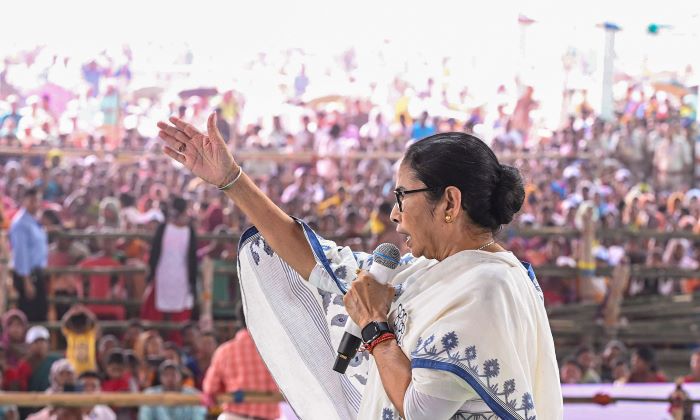
Banerjee, leader of the All India Trinamool Congress, has built her campaign around regional pride and resistance to outside political control. At rallies across the state, she has framed the election as a struggle to protect Bengal’s identity and democratic voice.
Her speeches frequently invoke Bengal’s cultural and political heritage, emphasizing the state’s historic role in India’s independence movement and intellectual life.
Banerjee has also highlighted women’s participation in politics, noting that her party has fielded a higher proportion of female candidates compared with its main rival.
Also Read: Report Card – Violence against Muslims in 2025
For the BJP, winning West Bengal remains one of the party’s most significant political goals. The state represents a major electoral prize and an opportunity to expand influence in eastern India.
Campaign messaging from the BJP has focused on issues such as immigration, governance, and law and order. Senior leaders have held large rallies and outreach programs throughout the state.
Political analysts say the BJP hopes that anti-incumbency sentiment in urban areas and shifts in voter demographics could help it gain ground.
Also Read: What Election Results Mean; An Example From My Files
West Bengal’s electorate is socially and politically complex. While some urban voters have expressed dissatisfaction with the ruling government, Banerjee continues to retain strong support in several rural areas.
Women voters and grassroots party networks have historically played an important role in Trinamool’s electoral strength.
Meanwhile, other opposition parties, including left-leaning groups that once dominated the state, are also attempting to regain influence.
Also Read: Improvement in public health and education system can benefit Indian Muslims…
As the campaign intensifies, the outcome remains uncertain. Political observers say the election could hinge on voter turnout, coalition dynamics, and the ability of each party to mobilize its base.
If Banerjee succeeds, she would secure a fourth consecutive term and reaffirm the strength of regional political leadership. If the BJP breaks through, it would mark one of the party’s most significant victories in eastern India.
Either way, the West Bengal election is shaping up to be one of the most closely watched political contests in India.
Also Read: DMK will protect the Muslims of Tamil Nadu: CM Stalin
This article is based on multiple political reports and campaign coverage, including analysis by Delhi-based journalist Saba Naqvi.
Editorial Reflection — Adam Rizvi
Democracy thrives when citizens are able to exercise their right to vote freely and confidently. Elections such as the one unfolding in West Bengal remind us how vital democratic participation is—not only in India but across the world. Political competition should ultimately strengthen democratic institutions and respect the voice of the people.
Follow The India Observer for global coverage of India, the Indian diaspora, and international affairs.
Also Read: Assembly Elections in April 2026 may witness a revival of the India Block
Readers are encouraged to share this story, comment, and subscribe for more independent journalism.
A major political battle is unfolding in India as West Bengal Chief Minister Mamata Banerjee seeks a historic fourth term while facing an aggressive challenge from the Bharatiya Janata Party (BJP) led by Prime Minister Narendra Modi. What does this election mean for India’s democracy and the future of regional politics?
Read the full analysis on The India Observer (TIO) by Editor-in-Chief Adam Rizvi and stay informed about developments shaping India and the global Indian diaspora.
Read the full story on The India Observer website.
Please LIKE, SHARE, COMMENT, and FOLLOW The India Observer to support independent journalism covering India, Indians worldwide, and international affairs.