Monday Musings: Why India’s Journalists Need a Survival Kit After Retirement
Share, Comment, Like, and Subscribe to support Independent Journalism!
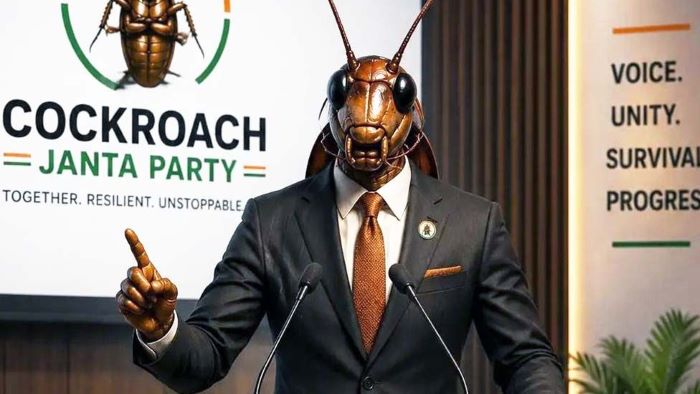
By Amitabh Srivastava, Edited By Adam Rizvi | Editor-in-Chief, The India Observer (TIO): Amid the controversy surrounding the so-called “Cockroach Janata Party” (CJA), which reportedly garnered nearly 20 million supporters within a week, a tragic story went largely unnoticed.
The CJA, which created waves internationally, reportedly emerged as a reaction to remarks attributed to the Chief Justice of India (CJI), who allegedly criticized unemployed youth with fake degrees for joining mainstream and social media to attack the system “like cockroaches.”
The government reacted swiftly. The organization was reportedly banned, and the founder’s family allegedly began receiving death threats. While such developments may have been expected, another story quietly slipped into the inside pages of newspapers.
It was the story of Rajesh Awasthi, a 65-year-old retired journalist from Meerut, who allegedly died by suicide after consuming poison in a park while his family was away.
Also Read: ‘We are Living in a mediatized Society,’ says noted journalist Syed Ali Mujtaba
His case reflects a troubling reality in India, where journalists often remain in focus for all the wrong reasons.
Since 2014, the media landscape has increasingly been divided into what many refer to as “Godi media” and “non-Godi media,” depending on perceived political alignments.
Officially, media freedom in India reached one of its lowest points during the Emergency, when the government of Prime Minister Indira Gandhi imposed censorship. But today, many in serious journalism are beginning to ask: Is media freedom the only issue that matters?
Ask the family of Rajesh Awasthi, an average, low-profile journalist who reportedly retired after barely reaching the level of Chief Sub-Editor.
Also Read: Monday Musings: NGOs Need to Draw Their Line Longer Than the Media
Ironically, life expectancy in India has increased over the past decade due to better awareness, healthcare, and wellness practices, including yoga popularized by spiritual figures such as Baba Ramdev.
Yet, even as the elderly population grows, support systems for them appear to be shrinking.
As the case of Rajesh Awasthi highlights, many elderly citizens are deprived of what could metaphorically be called a “life support system.”
The traditional joint family structure has weakened, while older citizens often struggle to secure loans, insurance, or travel concessions by road, rail, or air.
Also Read: Indian Media’s project to separate Hindus from Muslims is on the wane
Unlike many Western countries and European nations, India lacks a comprehensive social security system. For many people over the age of 60, a pension remains the only dependable support.
Even this, however, depends largely on discretion and policy variation. Around a dozen Indian states reportedly provide journalists with modest pension schemes ranging from ₹15,000 to ₹18,000 per month. Yet such support remains absent in metropolitan regions like Delhi-NCR, where living costs are among the highest.
The COVID-19 pandemic gave many newspapers an excuse to reduce pages and increasingly rely on freelance content, often without any long-term commitment or timely compensation.
Also Read: Sanatan Sanstha’s activities are hurting Indian Muslims
This stands in sharp contrast to lawmakers—Members of Parliament (MPs), Members of Legislative Assemblies (MLAs), and Members of Legislative Councils (MLCs)—who often continue to receive multiple pensions and benefits.
As critics point out, even when elected representatives face criminal charges or imprisonment, their families frequently continue to enjoy pension-related privileges for life.
Also Read: Growing Hate Crime against Muslims continues under Modi 3.0 rule
Read the full story and more updates at The India Observer.
Support independent journalism by sharing this article, commenting on the issue, and subscribing for future coverage.
Have a story, event, or issue to report?
Email your press release or tip to TheIndiaObserver@gmail.com— TIO covers news that matters. @AdamRizviTIO
Also Read more from this Author: Monday Musings: One Protest, Many Lessons
Curated By Humra Kidwai