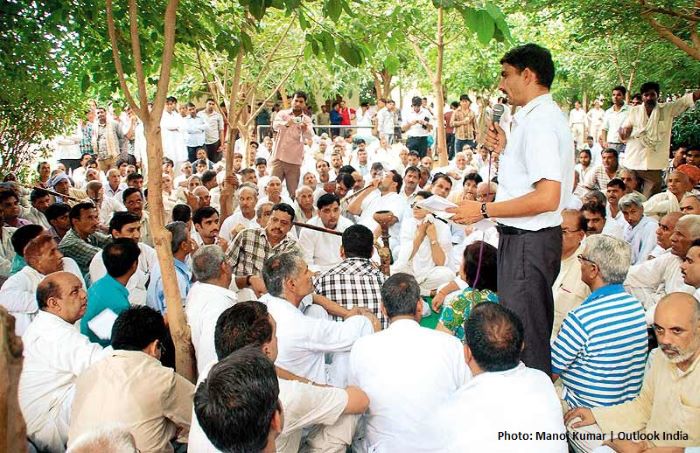
Viewpoint:The Benign Face of Indian Panchayats
Share, Comment, Like, and Subscribe to support Independent Journalism!
By Amitabh Srivastava, Edited by Adam Rizvi, The India Observer, TIO: The Panchayati Raj system, or rural self-governance, was initially conceptualised by Mahatma Gandhi and formally introduced in India in 1993 under the 73rd Amendment to the Constitution. 
It is a three-tier system of Even Panchayats in areas neighbouring the national capital, Delhi, were unwilling to accept these young couples.
These gatherings of village elders, known as Khap Panchayats, often felt a sense of pride in banishing such couples from their villages. In many cases, they went even further and killed the youngsters, terming it ‘honour killing’.
Also Read: High-Level Committee on Demographic Changes is a threat to India
The police, in most cases, reached the spot only after the ‘culprits’ had been done away with. Strangely, the elderly women in the families were often as harsh, if not harsher, than the men when it came to defending the family’s honour.
However, in the last few years, a fresh breeze, largely unnoticed by the media, has been blowing through the countryside, indicating greater tolerance and an understanding of individual sentiments.
There have been some very unusual cases in which married women with children have crossed the established boundaries of patriarchal societies and gotten away with it.
Also Read: Waqf Bill attack on India’s constitutional fabric: Pramod Tiwari, MP
One of the most complicated cases comes from Samastipur in Bihar. Here, a woman named Anuradha was in a long-term relationship with Panna Lal Yadav, but they could not get married. Both eventually married different partners and even had children.
Anuradha actually married a college mate, Manohar Kumar, who was already married and had two children. However, Anuradha could never get Panna Lal out of her head and heart and continued meeting him secretly.
The village elders caught them together, and the matter was taken to the Panchayat.
Also Read: ‘Modi Chalisa’ at Press Club of India bodes ill for the institution of the Press
All the principal individuals and their families were invited by the Panchayat to resolve the matter amicably. Anuradha expressed her desire to live with her first love, Panna Lal, to which her husband, Manohar, also agreed. All three are now reportedly living happily together (?).
In Badaun, Uttar Pradesh, a newlywed woman, Khushboo, decided that she wanted to live with her lover, whom she continued meeting whenever she visited her parental home.
She went to the police station and declared her intentions openly before everyone. Her husband, Sunil, who was also present there, immediately agreed to let her follow her heart. He told everyone that all three were happy with the arrangement. He said he was happy to let her go and see her alive rather than risk meeting the fate of Raja Raghuvanshi.
Also Read: Hundreds of Indian Civil Society Leaders Accuse
Raghuvanshi had been pushed off a cliff during his honeymoon in Meghalaya by three hired men allegedly engaged by his wife, Sonam Raghuvanshi.
Banda in Uttar Pradesh is proud of its tradition of Kidnapping a woman if you like her, whether she is married or not. However, in July 2017, Varsha Sahu gave this story a new twist when she kidnapped her lover from a wedding venue in style.
Ashok Yadav, the man who had been in a relationship with Varsha, was all set to tie the knot with a bride selected by his parents. However, before he could say ‘Yes’, Varsha arrived at the venue in her SUV, revolver in hand.
Also Read: Five Years Without Trial: Gulfisha Fatima’s Release Exposes India’s Crisis of Justice and Dissent
She announced before the gathering that they had been in a relationship for eight months, but he was being unfaithful, which she would not allow. In a happy role reversal, she kidnapped the man of her dreams in full public view.
In August 2026, a village Panchayat in Rampur was faced with a strange choice when a bride demanded that she wanted to live for 15 days with her husband and 15 days with her lover. However, her husband put his foot down and refused to agree to the arrangement, leaving the Panchayat unable to take a stand.
This is the age of Instagram love, as quick as five-minute Maggi noodles, and the new dispensation in some Panchayats seems to have become more democratic.
Also Read: India’s Vote, Its Streets and a Democracy Under Pressure: Who Will Hold Power Accountable?
In September this year, a 38-year-old woman, Suman Kumari, decided to leave her husband and three children to be with 18-year-old Pawan in Uttar Pradesh.
However, her Instagram posts revealed her location, and her husband managed to trace her. But she has refused to return.
No force, no diktat, and no invocation of family honour seem to be involved. ‘Live and let live’ appears to be the new norm.
Thankfully!
The India Observer — Fearless Journalism. Facts Matter.
Read the full story at TheIndiaObserver.com
Support independent journalism by sharing this article, commenting on the issue, and subscribing for future coverage.
Have a story, event, or issue to report?
Email your press release or tip to TheIndiaObserver@gmail.com— TIO covers news that matters. @AdamRizviTIO
Also Read more from this Author: Monday Musings: America at 250, India at 79: Democracies, Freedoms and Unfinished Promises
Curated by Humra Rizvi