Viewpoint: The revenge of the lumpens
Share, Comment, Like, and Subscribe to support Independent Journalism!
By Amitabh Srivastava, Edited by Adam Rizvi, The India Observer, TIO: “It was the best of times, It was the worst of times.” When Charles Dickens wrote these lines in A Tale of Two Cities in 1859, no one could have imagined that they would one day seem to describe the situation of children known as Gen Alpha in India in 2026. 
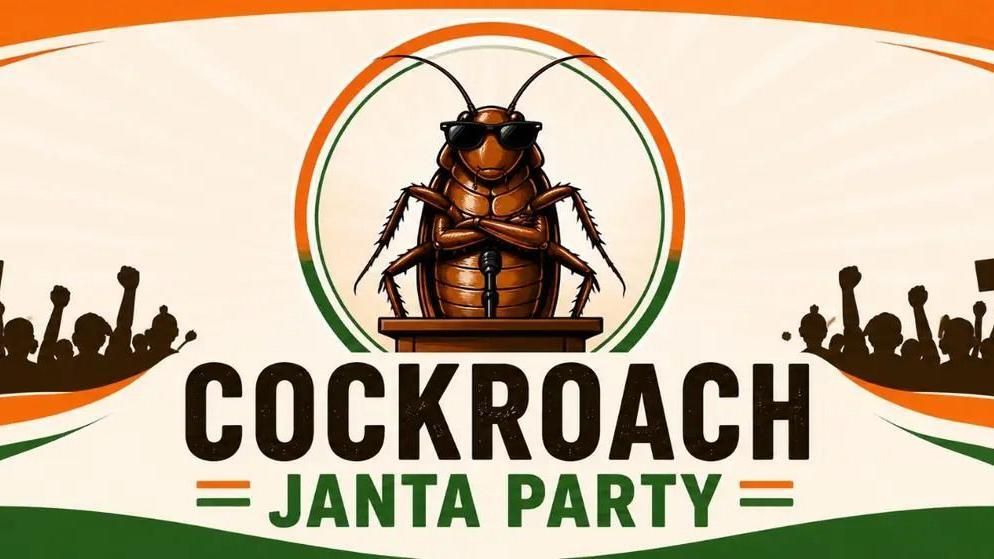
Only a few months ago, Gen Z appeared to have scored a significant victory when the agitation led by the Cockroach Janata Party at Jantar Mantar forced the Modi government to drop Education Minister Dharmendra Pradhan—the first such resignation in 12 years.
Also Read: ‘Modi Chalisa’ at Press Club of India bodes ill for the institution of the Press
The Ministry of Education had come under fire after question papers for the National Eligibility-cum-Entrance Test (NEET), used for selecting medical students, were leaked, putting the hopes, careers and financial investments of thousands of students and their parents in jeopardy.
The issue took an unexpected turn when a young Indian settled in the United States, Abhijeet Dipke, formed an online Cockroach Janata Party with a full manifesto that eventually turned into a movement.
He returned to India and headed straight for Jantar Mantar, the spot nearest Parliament where protesters are permitted to assemble by the Delhi Police. The earlier protest venue, the Boat Club, has since been sealed.
Also Read: Monday Musings: Yes Boss, says India
The nearly month-long agitation brought the Modi government under considerable pressure, and it eventually agreed to the protesters’ demands after attempts to quell the agitation, including a lathi-charge and the use of pellet guns, failed.
This was followed by schoolchildren, known as Gen Alpha, taking to the streets in several cities to demand better facilities in their schools.
This new defiance, emerging right from homes and schools, has made many Indian families uncomfortable. Some of the more sophisticated sections of society, including women MPs of the ruling BJP—described here in the author’s satirical vein as “Bollywood heroines”—openly expressed their anger, attacking the protesters for using foul language and dressing inappropriately.
Also Read: A bicycle crashing into a plane
A 15-year-old girl was asked to apologise for using offensive language against the Prime Minister. She reportedly did so three times.
But the lumpen elements who feel sufficiently entitled—many of whom receive free rations and participate in election rallies organised by political parties—saw this as an opportunity to score brownie points with their political masters.
The experiment began in Jamui, a relatively backward district of Bihar, where a group of seven or eight men allegedly surrounded two schoolchildren returning from their coaching classes and began beating the boy because he was travelling with a girl.
Also Read:‘Modi Chalisa’ at Press Club of India bodes ill for the institution of the Press
One of them even dared to pull the girl off the scooter and pretended to carry her away. Fortunately, the boy, despite being beaten, refused to leave her. Both students pleaded with the men to let them go, and eventually they were allowed to leave.
But not before one of the attackers recorded a video and circulated it on social media—apparently to teach Gen Alpha and their parents a lesson, and perhaps to signal to others that they were available for such “dirty work.”
The matter might have gone largely unnoticed but for Leader of the Opposition Rahul Gandhi, who shared the video on his social media account, following which three of the accused were arrested.
Also Read: Growing Hate Crime against Muslims continues under Modi 3.0 rule
Jamui also has a woman minister, Shreyasi Singh, who studied at Hansraj College, a co-educational college in New Delhi. She also commented on the issue of boys and girls going out together.
But this was only the beginning.
The very next day, a boy and a girl—the girl a minor—were reportedly attacked by another group of miscreants in Samastipur, again in Bihar, ostensibly to “teach them a lesson.”
Before the police could fully respond, similar incidents were reported in another city in Bihar within a week.
Also Read: The Battle For Bihar: Questions, Concerns & The Future Of India’s Democracy
And in these cases, the attackers did not forget to record videos and circulate them on social media, sending out a chilling message: the mentality that led to the 2012 Nirbhaya case has not disappeared.
Ram Singh, the driver of the private bus and one of the six accused in the December 16, 2012, attack on Jyoti Singh, known as Nirbhaya, and her male companion in Munirka, New Delhi, was found dead in Tihar Jail in 2013. Four other convicts were later executed after a prolonged legal process.
Yet the ghost of that crime continues to haunt Indian society.
This was demonstrated again a few days ago when a young girl was allegedly gang-raped near a temple in the heart of New Delhi.
Also Read: Bollywood movies are rife with anti-Muslim plots
On September 21, a minor girl accompanied by a male friend reportedly visited a famous temple in Kalkaji. Afterward, they were sitting in a park known as Astha Park when three men, allegedly posing as plainclothes policemen, began beating them.
The girl was subsequently allegedly gang-raped and threatened with serious consequences. CCTV footage helped police identify and apprehend the accused after the incident received media attention.
As often happens, the Delhi government, led this time by Chief Minister Rekha Gupta, responded by identifying so-called “dark spots” in the city.
Old-timers will remember similar exercises undertaken by her predecessor, Arvind Kejriwal of the Aam Aadmi Party, and, if memory serves, by Sheila Dikshit of the Congress after the Nirbhaya incident in 2012.
Also Read: Media Professionals Have No Dignity Left in India
It is now 2026.
Have we changed?
Despite the catchy slogans and glossy full-page advertisements, I feel India is worse off than it has ever been. And there appears to be no light at the end of the tunnel, because the CJP will never be able to match the BJP.
The India Observer — Fearless Journalism. Facts Matter.
Read the full story at TheIndiaObserver.com
Support independent journalism by sharing this article, commenting on the issue, and subscribing for future coverage.
Have a story, event, or issue to report?
Email your press release or tip to TheIndiaObserver@gmail.com— TIO covers news that matters. @AdamRizviTIO
Also Read more from this Author: Monday Musings: 25 Years of 9/11
Curated by Humra Kidwai