
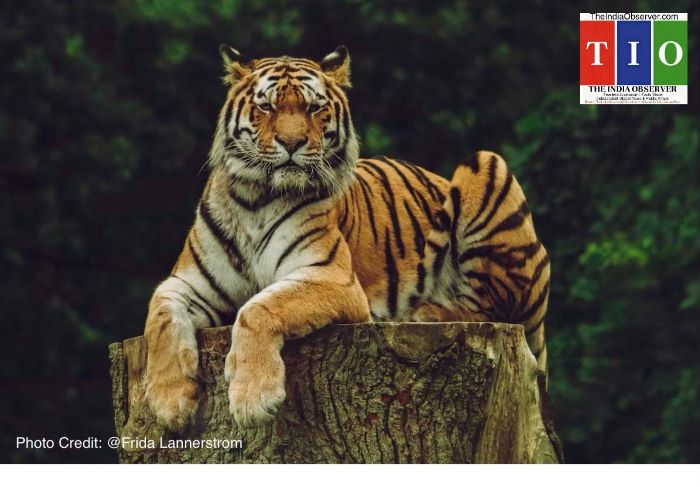
International Tiger Day: Celebrating a Conservation Success While Protecting the Future of the World’s Greatest Predator
Share, Comment, Like, and Subscribe to support Independent Journalism!
By Keshav Varma, IAS (Retd.) Founding Director, Global Tiger Initiative
Edited for publication by Adam Rizvi, Editor-in-Chief, The India Observer (TIO): Every year on July 29, the world comes together to celebrate International Tiger Day — a day dedicated to one of the planet’s most magnificent and powerful species.
International Tiger Day was announced on November 23, 2010, at the St. Petersburg Tiger Summit. Since then, it has become a global reminder of the importance of protecting the tiger, not only as an iconic animal but as a critical indicator of the health of our forests and ecosystems.
Also Read: OC USA New Jersey Delegation Meets Congress Leadership in New Delhi, Discusses Diaspora Engagement
The tiger represents the strength and resilience of nature itself. The survival of this apex predator reflects the ability of governments, conservationists, scientists, forest officials, and communities to work together toward a shared goal.
A Conservation Achievement Worth Celebrating:
Looking back over the past sixteen years, there is much to celebrate. The recovery of wild tiger populations stands among the world’s most remarkable conservation achievements.
 The resurgence of tigers demonstrates what can be accomplished when there is political commitment, scientific management, effective habitat protection, and dedicated enforcement.
This success belongs to the countless conservation warriors, forest officers, researchers, and frontline personnel who have devoted their lives to protecting these magnificent animals. Their courage, professionalism, and commitment deserve our deepest respect and gratitude.
However, while celebrating this progress, we must also acknowledge that the battle is far from over.
New Threats Facing Tigers:
The story of tiger conservation has another side — one that demands urgent attention.
Also Read: Foreign occupation is destroying the very fabric of Kashmiri society
Illegal wildlife trafficking continues to threaten tiger populations. The demand for tiger parts, particularly in some Asian markets, has contributed to renewed pressure on these endangered animals. At the same time, illegal wildlife markets and unregulated activities continue to challenge conservation efforts.
 With global attention focused on wars, political conflicts, and other crises, wildlife criminals often attempt to exploit these distractions. The international community must remain vigilant and ensure that wildlife protection does not disappear from the global agenda.
Also Read: Is The Economist Cover Still Valid: Advantage Iran
Protecting the Last Remaining Wilderness:
Another serious concern is the gradual loss of protected habitats.
Many of the world’s remaining wilderness areas contain valuable mineral resources, creating increasing pressure from mining and development activities. Protected landscapes, which serve as the last safe havens for tigers and countless other species, must not be weakened through short-term interests.
“The destruction of forests does not only threaten wildlife; it affects climate stability, water security, and the ecological balance that supports human life.
“We have faced similar challenges before, and history has shown that coordinated action can make a difference.
Also Read: Peril of not knowing Gordafarid
A Global Response Is Needed:
The protection of tigers requires stronger international cooperation.
Global organizations, governments, and enforcement agencies must work together to combat wildlife trafficking and protect biodiversity. Institutions such as INTERPOL, UNODC, SAWEN, East Asia WEN, ICCWC, the World Bank, Asian Development Bank, Global Environment Facility, and UNDP all have important roles to play in creating a coordinated response.
At the national and local level, frontline teams must continue receiving modern technology, training, resources, and support. Conservation officers must remain prepared to counter increasingly sophisticated trafficking networks.
Also Read: For dealing with US, India needs to “look at the way Iran has handled it”: Saeed Naqvi
 Communication and public awareness are equally important. Conservation issues must remain visible and continue receiving global attention.
Looking Ahead: Renewed Commitment for Tiger Protection:
I will be discussing with the senior leadership of the Global Tiger Forum and the International Big Cats Alliance the possibility of organizing a Tiger Range Countries Forum this coming winter, with a dedicated focus on illegal wildlife trade and trafficking.
International Tiger Day is not only a celebration of what we have achieved; it is also a reminder of our responsibility.
The tiger’s survival depends on continued vigilance, cooperation, and commitment. The choices we make today will determine whether future generations inherit a world where tigers continue to roam freely in the wild.
Also Read: MAGA Ideologue Calls Trump “Moses Leading His People To Promised Land”
Let us celebrate the tiger — but let us also protect it.
Happy International Tiger Day.
Read the full story and more updates at The India Observer.
Support independent journalism by sharing this article, commenting on the issue, and subscribing for future coverage.
Have a story, event, or issue to report?
Email your press release or tip to TheIndiaObserver@gmail.com— TIO covers news that matters. @AdamRizviTIO
Curated By Humra Kidwai


