Monday Musings Why Are Journalists and Film Critics on Two Sides of ‘Satluj’?
Share, Comment, Like, and Subscribe to support Independent Journalism!
By Amitabh Srivastava| Edited by Adam Rizvi, The India Observer (TIO): The question has been racking my mind—and my sense of journalistic ethics—ever since I read an editorial in a so-called national newspaper about a fortnight ago.
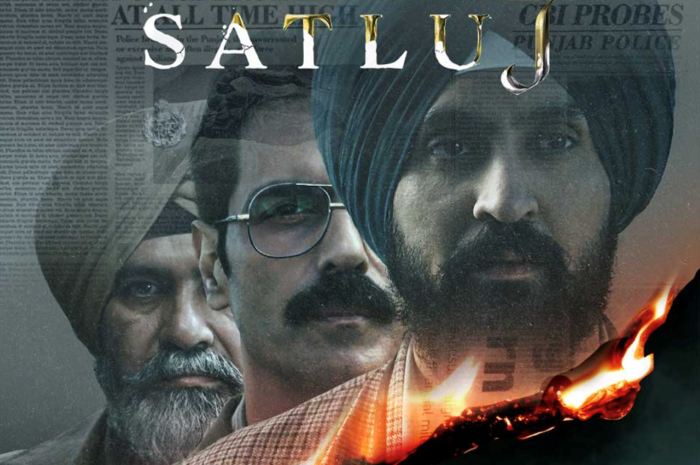
The controversy surrounding Satluj, the film starring Diljit Dosanjh, which appeared on Zee5 for a day before being banned the following day, seems to be going on and on.
Satluj deals with the disappearance of 25,000 Sikhs during the height of Sikh terrorism in Punjab in 1995. The matter was taken to the United Nations by human rights activist Jaswant Singh Khalra of the Akali Dal. Jaswant Singh was later abducted from outside his house, jailed and killed.
Also Read: Monday Musings: An epitaph to Journalism
This was the period when the high-profile Director General of Police, K.P.S. Gill, had been given a free hand by the government headed by then Prime Minister P.V. Narasimha Rao to rid Punjab of terrorism.
The film was finally ready in 2023 but saw the light of day only after a three-year battle with the censor board, which cleared it for viewing after changing its title from Punjab 95 to Satluj.
As was expected, the initial reaction to the film in the media was overwhelmingly positive, thanks to reviews by film critics who have a traditional and healthy allergy to the Central Board of Film Certification (CBFC).
Also Read: War On Journalism
The film was praised for its honesty and research on a subject that has universal acceptance.
The producers of the film—Ronnie Screwvala, Abhishek Chaubey and Honey Trehan—were understandably delighted as the film’s viewership picked up.
Some journalists said that the film’s release was timed to create bad blood between the Congress and the Aam Aadmi Party (AAP) in Punjab, which is due to go to the polls in a few months. That, of course, may well be true.
But suddenly, more than a month after its release and ban, political journalists—some of them authors who have extensively covered Punjab during its most difficult period—have jumped in to point out that the film is one-sided.
Also Read: ‘We are Living in a mediatized Society,’ says noted journalist Syed Ali Mujtaba
The editor of a national newspaper, in an editorial note, went on to challenge the authenticity of the film’s narrative.
He suggested that the film totally ignores the gory killings carried out by Sikh terrorists during that period and cited details of some cases that had faded from public memory to buttress his point.
For people like this all-powerful and influential editor, human rights activists perhaps only complicate and confuse issues by selling “sob stories” that are nothing more than exaggerated pieces of fiction writing.
Also Read: Zafar Agha- A Journalist Par Excellence
If journalists-cum-book writers also join this narrative, it is understandable. They have to sell their books and, in the process, highlight their own bravado and guts in reporting from difficult terrain.
But an editor whose newspaper sells in lakhs should be more careful with his editorials because they inevitably influence the viewpoints of committed readers, often without their realizing it.
What hurts me most in this debate is seeing senior journalists, who should have their hearts in the right place, appear to highlight the gory deeds of terrorists—stories that, in my view, are best left in the historical record rather than repeatedly brought back into public discourse in a manner that could damage communal harmony.
Also Read: Indian Media’s project to separate Hindus from Muslims is on the wane
The school of journalism I was trained in, on the other hand, keeps the focus on bringing hidden stories of human rights violations to light. That includes not only police atrocities, as depicted in Satluj, but also everyday cruelties: incidents at Jantar Mantar, child abuse, the Nithari killings, beggary, bonded labour, child labour and domestic violence. In fact, the domestic violence law should perhaps be made gender-neutral to avoid the controversies we see today.
Let films, literature and the arts celebrate positivity, love, patriotism, bravery and achievements if that helps attract advertisements and sponsors. Everyone has the right to survive.
But for my type of journalism, the spotlight will always remain on defending and supporting weaker human beings and trying to maintain communal harmony and peace.
For this, one needs to be real and not hide behind anonymity.
Also Read: Reflections After 38 Years: Will the Twain (Social Sector and Media) Meet?
For instance, I know from personal experience that many women in my family circle discuss the latest Pakistani films being shown on YouTube while also being ardent fans of Modi and his brand of Hinduism in their conversations.
To my mind, there is no need to be apologetic about this.
Literature, theatre, music, art and cinema have always been works of artists who, in their own ways, believe in Vasudhaiva Kutumbakam, if I may say so. The characters in their works are normal human beings, with normal weaknesses and strengths.
We used to see such camaraderie in cricket too. Cricket has been one of the biggest unifying factors between India and Pakistan. Unfortunately, in recent times, even this “gentleman’s game” has been hit by orders from political leaders on both sides.
The loss is not only that of the fans but also of revenue. When India-Pakistan cricket matches are played at neutral venues, they remain among the biggest money-spinners in the game.
Also Read: Jews, Zionists and the media
Perhaps that is the real tragedy: when politics begins deciding what people can watch, read, hear or cheer for, everyone loses.
Read the full story and more updates at The India Observer.
Support independent journalism by sharing this article, commenting on the issue, and subscribing for future coverage.
Have a story, event, or issue to report?
Email your press release or tip to TheIndiaObserver@gmail.com— TIO covers news that matters. @AdamRizviTIO
Also Read more from this Author: Monday Musings: Demanding plugging the leaks can be suicidal
Curated By Humra Kidwai