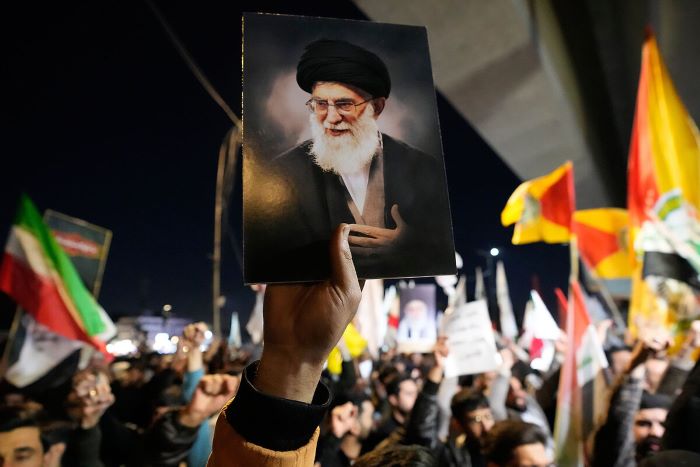
Wrong Cannot Be Righted by More Wrong: Condemning the Assassination of Iran’s Supreme Leader and the Failure of the Muslim World
Share, Comment, Like, and Subscribe to support Independent Journalism!
By Adam Rizvi | Editor, The India Observer (TIO): A strong condemnation of the killing of Iran’s Supreme Leader Ayatollah Ali Khamenei, the failure of Muslim nations to unite for justice, and the urgent need to defend international law and peace.
The targeted killing of Ayatollah Ali Khamenei — the Supreme Leader of the Islamic Republic of Iran — marks one of the most alarming breaches of international norms in recent history.
Also Read: Fallout From Iran, Ukraine Wars: Rich Seek Doomsday Hideouts
Whether one agrees or disagrees with his policies, ideology, or governance, the assassination of a sitting national leader outside the framework of international law is fundamentally wrong and dangerous.
On 28 February 2026, the world witnessed a joint military operation by the United States and Israel that culminated in the death of Ayatollah Khamenei. Such an act — executed without Security Council mandate or global consensus — threatens the very foundation of sovereign equality and the UN Charter’s prohibition on the use of force except in self-defense.
This is not a geopolitical debating point. It is a matter of human dignity, state sovereignty, and global legal order.
Also Read: That longing for regime change
Assassinating a political leader sets a precedent that undermines the principles of diplomacy and peace. It creates a world where might supersedes right, and where targeted killings become an instrument of power rather than a last-resort defensive measure.
History will not remember such an act as a triumph of justice. It will record it as a failure of law, restraint, and humanity.
was a central figure in shaping the modern Middle East for decades. For millions of Iranians, he was more than a politician — he was an emblem of national identity and continuity.
No political disagreement with his vision should ever justify his killing. Violence of this magnitude begets instability, retaliation, and civilian suffering. The path to peace and security lies not in assassination but in dialogue, negotiation, and adherence to global norms.
Also Read: Khamenei’s Defiant Stand: Iran’s Supreme Leader Rallies a Nation Against Israel’s Onslaught
What is perhaps most heartbreaking is the muted and fractured response from Muslim nations.
When the leader of a major Muslim nation is assassinated, one would expect a robust and unified diplomatic outcry — especially from bodies such as the Organization of Islamic Cooperation (OIC) and regional Islamic governments. Instead, the world saw inconsistent statements, diplomatic caution, and a lack of moral unity.
Where are the urgent appeals for respect for sovereignty?
Where are the calls for de-escalation and peace?
Where is the collective defense of international law for the dignity of all nations?
Also Read: A movement against oppression.
A fractured Muslim world, unable to present a united front even in the face of blatant breaches of global norms, fails its own people and humanity at large.
This is not about glorifying a leader’s politics. This is about the universality of law, human values, and global order. If international norms are abandoned in one instance, they can be abandoned again — anywhere.
For the sake of peace, for the sake of justice, and for the sake of future generations, the international community — and especially Muslim nations — must demand:
- Respect for the sovereignty of nations,
- A return to diplomatic engagement over military force,
- Strong international legal mechanisms that apply equally to all.
Wrong cannot be righted by more wrong.
Also Read: Iran restored the dignity of Muslims Worldwide in the Clash of Civilizations
Violence will not usher in peace.
Assassination will not build stability.
The strength of any nation — and any global community — is judged by its commitment to principle, fairness, and justice for all.
Have a story, event, or issue to report? Email your press release or tip to mediaiss@gmail.com editor@TheIndiaObserver.com — TIO covers news that matters.