
Monday Musings: One Protest, Many Lessons
Share, Comment, Like, and Subscribe to support Independent Journalism!
By Amitabh Srivastava, Edited By Adam Rizvi | Editor-in-Chief, The India Observer (TIO): Sometimes, it takes just one ordinary citizen to hold up a mirror to the nation. Mumbai witnessed one such moment last week.
In a country perpetually in the grip of political rallies and roadshows, a woman—until recently unknown—found herself at the center of a national conversation. Stuck in traffic and running late to pick up her daughter from a music class, she confronted the system head-on, demanding that the road be cleared.
Also Read: Indian Media’s project to separate Hindus from Muslims is on the wane
The now-viral video captured Teena Chaudhry arguing with police officers, who repeatedly asked her to lower her voice. The roadblock, created for a political rally, had left commuters stranded. Like many such instances, the inconvenience seemed routine—until someone chose not to accept it quietly.
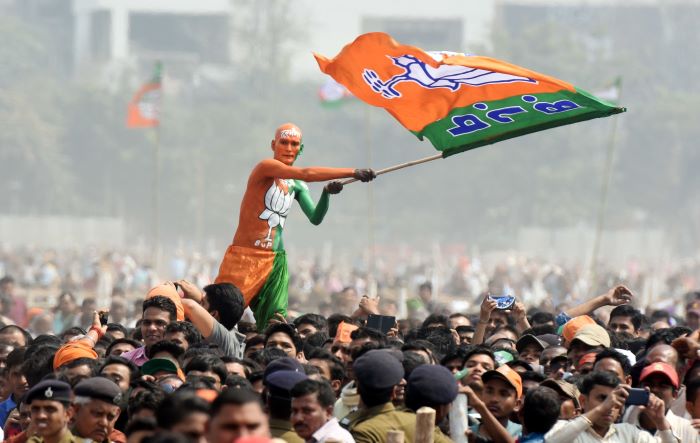
What followed was unexpected. BJP MLA Girish Chauhan, who was leading a rally in support of women’s reservation, stepped in. Instead of dismissing her, he listened. Soon after, he directed his supporters to clear the way, allowing traffic to move.
The reactions online were predictable in their contrast. Many praised her courage, calling her a symbol of assertive citizenship. Others were quick to judge—questioning her timing, her tone, even her intent. Social media, as always, swung between admiration and criticism.
Also Read: Politician and Sex crime is a new political culture in India
Later, breaking her silence, Chaudhry explained her side. She said she had been waiting for over an hour, requesting multiple officers to remove two buses blocking the road. Her appeals, she claimed, were ignored until she raised her voice.
Her demand was neither radical nor unreasonable. Why should public roads be blocked for political rallies? Why not use designated grounds instead of inconveniencing thousands?
She also clarified that her outburst was not meant as disrespect. Coming from an army background, she values discipline—but also believes that authority must be accountable. When officials fail in their duty, citizens have every right to question them.
Also Read: Dravadian homeland demolition project is facilitating DMK’s victory in Tamil Nadu
There is, however, a deeper lesson here.
Decades of observing public life reveal a stark contrast: bureaucrats often function insulated from public pressure, appearing rigid and indifferent. Politicians, on the other hand, are compelled to remain responsive—if only because they must return to the people for votes. This incident reflected that divide rather clearly.
Yet, it would be naive to assume that every such act of defiance will end well. Context matters. This happened in Mumbai, under the glare of media cameras. One wonders how such a confrontation might unfold in a smaller town, away from public scrutiny.
Also Read: It’s ‘Domicide’, not Bulldozer Demolition
Still, one truth remains undeniable: when personal urgency meets public indifference, silence is no longer an option.
At its heart, this was not just about traffic or a delayed pickup. It was about a citizen refusing to be invisible—and in doing so, reminding the system of its duty.
One protest, indeed, can carry many lessons.
Also Read more from this Author: Monday Musings: “Fair is Foul, and Foul is Fair”: A Reflection on Politics in Our Times
Curated By Humra Kidwai


