
AI-Enabled Glasses Distributed to Visually Challenged Students at AMU
Share, Comment, Like, and Subscribe to support Independent Journalism!
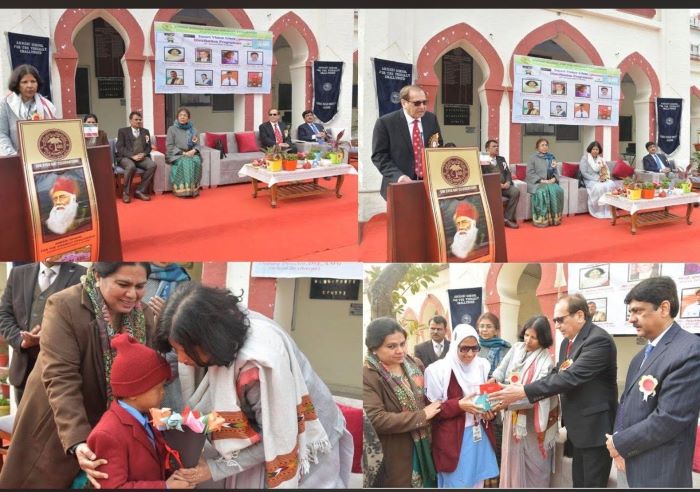
By Mehdi Moosvi | The India Observer (TIO): ALIGARH, INDIA — In an effort to strengthen inclusive education through assistive technology, a Non-profit organization, Vision-Aid incorporated, based in Boston, United States, organised a smart vision glasses distribution programme at Aligarh Muslim University’s (AMU) Ahmadi School for the Visually Challenged, Aligarh, India.
Led by Mr. Syed Ali Rizvi, Director of Vision-Aid, Massachusetts, who facilitated the provision of AI-enabled smart vision glasses, the programme saw the distribution of the devices along with smartphones to 30 visually challenged students of Classes VII to X on Thursday. Rizvi, invited as the Special Guest, distributed the assistive aids in the presence of the Chief Guest and AMU Vice-Chancellor Prof. Naima Khatoon at the Ahmadi School for the Visually Challenged, the only school for the visually impaired located on a university campus in the country.
The smart vision glasses are designed to address some of the most persistent challenges faced by visually impaired students, including reading printed material, recognising objects, currencies, and navigating daily spaces. For many visually challenged learners, academic progress is often hindered by dependence on others, limited access to assistive tools, and difficulties in mobility—barriers that can also affect confidence and independence.
Rizvi highlighted the broader vision behind the initiative, stating that true empowerment lies in equipping students with the ability to imagine possibilities and pursue their aspirations independently. Recalling Vision-Aid’s association with the Ahmadi School since 2015, when a computer lab was first established, he noted that the organisation currently works across nearly 50 locations in over 20 cities in India, focusing on sustainable technological interventions for the visually challenged.
New Jersey Communities Mark Muslim Heritage Month with Proclamations and Civic Celebrations
Later, VC Khatoon emphasised that inclusive education must focus not only on access but also on dignity and empowerment. She observed that assistive technologies such as smart vision glasses play a crucial role in enabling visually challenged students to participate meaningfully in classrooms and everyday life, thereby reducing social and educational inequalities.

The programme was held in collaboration with Vision-Aid and Dr. Shroff’s Charity Eye Hospital. Experts from Dr. Shroff’s Charity Eye Hospital, including Senior Optometrist Mr. Nasim Akhtar, Shri Ram from SHG Technologies (the manufacturer of the devices), and Anshuman Agarwal, the North-India Operations head of Vision-Aid, travelled from New Delhi for the live demonstration of the smart vision glasses, explaining their features and benefits to students and teachers. The programme was attended by the students, teachers, administration, well-wishers and alumni of Ahmadi School.
The initiative was coordinated by Professor Asfar Ali Khan, Officer on Special Duty to the Vice-Chancellor, whose efforts enabled the collaboration. The proceedings were conducted by Ms. Nudrat Jahan, PGT (Physics), and the vote of thanks was proposed by Mr. Shoukat Ahmad Malik, a student at the school, bringing the programme to a close on an optimistic and forward-looking note.
AMU Riding Clubs’ 41 bighas of land taken over by Aligarh Nagar Nigam
Vision-Aid is a nonprofit organization committed to a simple but powerful mission: to enable, educate, and empower persons with visual impairment so they can live independently and with dignity. Across India, we work with trusted partners to provide assistive technology, training, education support, and vision rehabilitation—always with the goal of inclusion, not charity.
Read more stories on education, accessibility, and global community service at The India Observer
Share, comment, like, and subscribe to support independent journalism.
Email your press release or tip to mediaiss@gmail.com
Curated by Humra Kidwai


