Epstein, Anil Ambani, and Unanswered Questions: Why India’s Prime Minister’s Office Must Clarify
Share, Comment, Like, and Subscribe to support Independent Journalism!
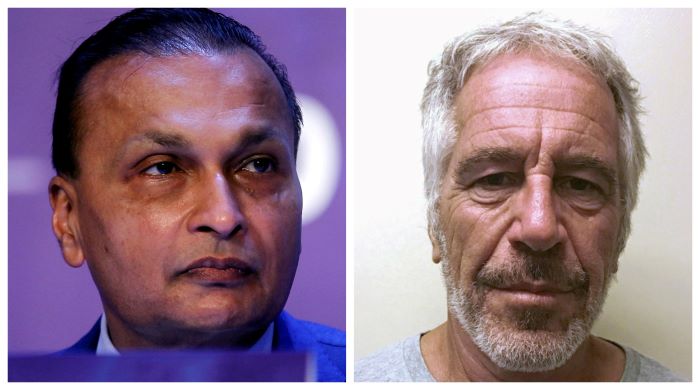
By Adam Rizvi | Editor, The India Observer (TIO): As fresh documents and communications linked to convicted sex offender Jeffrey Epstein continue to surface globally, new questions have emerged about his interactions with powerful business and political networks across continents. One such trail, now circulating in public discourse, involves Anil Ambani, once among India’s most influential tycoons, and raises uncomfortable questions that the Prime Minister’s Office (PMO) of India cannot afford to ignore.
Between 2017 and 2019, Anil Ambani was widely regarded as one of the businessmen with close access to Prime Minister Narendra Modi, second only to Gautam Adani in perceived proximity to the highest levels of power. During this same period, Epstein — already a convicted sex offender under U.S. law — was actively cultivating elite contacts worldwide.
The curious case of Trump invitees
According to messages attributed to Epstein and now circulating publicly, Ambani remained in communication with him during this timeframe. More troubling are references in those communications suggesting that a person described as “Modi’s guy” may have sought or discussed access in Washington, D.C., and that a meeting with Epstein in New York on May 23, 2019 may have been arranged.
These claims, as presented, remain unverified. But their mere existence raises serious questions of public interest — questions that demand clarification, not silence.
The India Observer is not making allegations. However, in any democracy governed by the rule of law, the following questions are legitimate and unavoidable:
Jack Ciattarelli Voted to Give Rapists Parental Rights, Blocked Key Protections for Survivors
-
Did any official or unofficial emissary, acting in the name of the Indian Prime Minister or his office, meet Jeffrey Epstein in New York in May 2019?
-
If no such meeting occurred, was Modi’s name misused by an intermediary to gain influence or access?
-
Why was a businessman known for proximity to the Prime Minister maintaining communication with a man officially described by India’s own Ministry of External Affairs as a “convicted criminal”?
-
Has any inquiry been initiated to determine whether Indian interests, reputational or otherwise, were compromised through such contacts?
Even if Epstein’s own words are dismissed as exaggeration or “trashy ruminations,” as some defenders suggest, the burden of transparency still lies with those whose names were invoked.
Jeffrey Epstein was not an ordinary criminal. His network, finances, and political access are under scrutiny precisely because they reveal how power shields predation. When names of elected leaders or their close associates surface — even indirectly — public accountability becomes non-negotiable.
Monday Musings: That makes three in a (death) row
Prime Minister Modi has often spoken of “zero tolerance”, strong governance, and moral leadership. Those claims must be matched with clarity when serious questions arise — especially when they involve individuals who once enjoyed extraordinary access to power.
This is not occurring in a vacuum. Modi’s government has previously faced criticism from international human rights organizations and civil society groups over transparency, institutional accountability, and the treatment of minorities. While those issues are separate, they underscore a broader concern: when power goes unquestioned, institutions weaken.
Silence in the face of credible public questions only fuels speculation and damages India’s global standing.
No individual — businessman or prime minister — should be above scrutiny. This is not about ideology, religion, or politics. It is about governance, responsibility, and the integrity of public office.
If there is nothing to hide, the PMO should state so clearly, on record, and without ambiguity.
Editorial Comment
History has shown us that crimes like Epstein’s thrive in shadows created by influence and fear. Democracies survive only when power is questioned — calmly, lawfully, and without intimidation. India deserves answers, not evasions. Transparency is not an attack on the nation; it is a service to it.
Read the full story on The India Observer.
Have documents, tips, or information relevant to this story?
Email the editorial desk at The India Observer.
Read the full story on our website, share it widely, and subscribe to support independent journalism.
Curated by Humra Kidwai