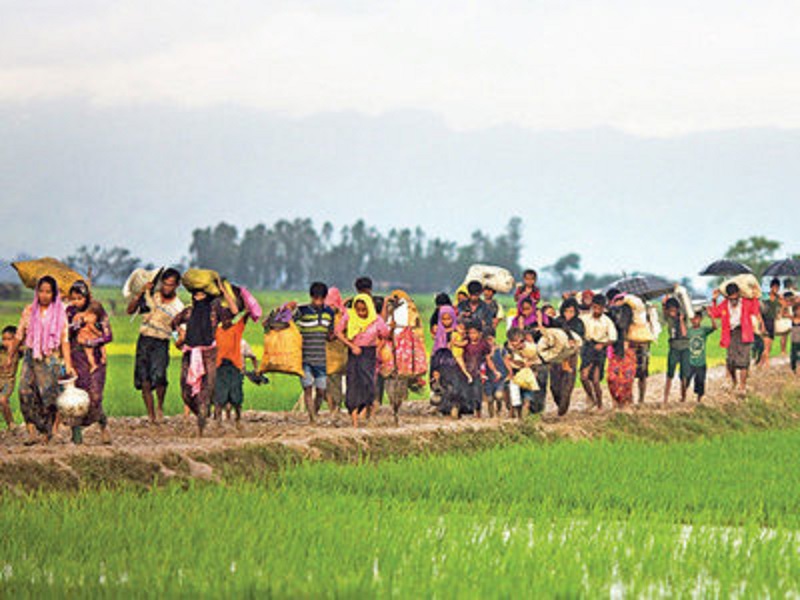
UN criticism unlikely to change India’s stance on Rohingya Muslims

According to the UN office in Bangladesh, more than 3 lakh Rohingyas have fled into Bangladesh from Myanmar since violence broke out in Rakhine on August 25.
In India, nearly 40,000 Rohingya Muslims are staying illegally while another 14,000 have been registered with the United Nations High Commissioner for Refugees (UNHCR). Majority of these illegal Rohingya immigrants have settled in Jammu, Haryana, Uttar Pradesh, Hyderabad, Delhi-NCR and Rajasthan.
The Indian Government feels that illegal immigrants like Rohingyas pose grave security challenges as they could be recruited by terror groups and directed local state governments to identify them and subsequently deport them.
NOT BOUND BY UNITED NATIONS
As international organisations call on India to not deport Rohingyas, India can back its stand on deportation by stating that it is neither a signatory to the 1951 Refugee Convention of the UN nor did it sign its 1967 Protocol. In total, 148 countries have signed either of the two protocols that clarify the rights of refugees and help protect them.
As late as May this year, India had not ratified the United Nations Convention against Torture despite being a signatory to the convention in October 1997.
The Article 3 of the Convention against Torture states that “no party shall expel, return (refouler) or extradite a person to another State where there are substantial grounds for believing that he would be in danger of being subjected to torture”.
It further says that “for the purpose of determining whether there are such grounds, the competent authorities shall take into account all relevant considerations including, where applicable, the existence in the State concerned of a consistent pattern of gross, flagrant or mass violations of human rights”.
India, however, is yet to make a law on the same to ratify the convention.