
Monday Musings: What About the Right to Live with Dignity?
Share, Comment, Like, and Subscribe to support Independent Journalism!
By Amitabh Srivastava, Edited By Adam Rizvi, The India Observer (TIO): When Prime Minister Narendra Modi promised “Achche Din” in 2014, it was a call for hope—an assurance that better days lay ahead for millions of Indians. Over a decade later, the meaning of those “good days” continues to be debated, interpreted, and questioned.
India recently made international headlines when the Supreme Court permitted passive euthanasia in the case of Harish Rana, an engineering student who had remained in a vegetative state for 13 years following a fall from the fourth floor of a building. The decision was widely hailed as an affirmation of the “Right to Die with Dignity,” seen as an extension of constitutional protections of personal liberty.
Also Read: It’s ‘Domicide’, not Bulldozer Demolition
Yet the timing of this development is striking. Around the world, conflicts continue to escalate. The prolonged Russia-Ukraine war drags on, and the Israel-Hamas conflict has left haunting images and stories that still echo across global discourse. The international atmosphere remains heavy with uncertainty, violence, and loss of life.
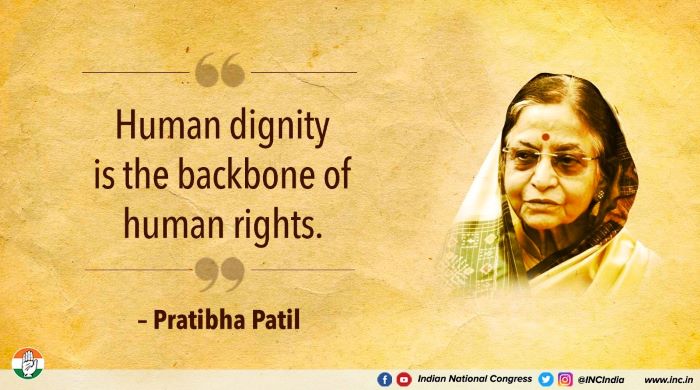
In contrast, India stands apart, celebrating a legal and moral victory centered on dignity in death. But this raises an uncomfortable question: what about dignity in life?
This is a country where stampedes at religious gatherings have claimed hundreds of lives, where public celebrations sometimes turn tragic, and where hospital fires continue to expose vulnerabilities in basic safety systems. These incidents are not isolated; they are reminders of systemic gaps affecting ordinary citizens.
Also Read: Clue To The Conflict: Gaza Sits on Trillions Worth of Gas
Amid such realities, conversations about the “Right to Live with Dignity” appear muted. Unemployment remains a concern in 2026, yet the issue seldom dominates public debate. The Employment Exchanges that once symbolized hope for job seekers now seem like relics of another era.
Government announcements highlight welfare measures, such as free food grains for over 81 crore beneficiaries under national schemes. While such initiatives address immediate needs, they also underline a deeper challenge: a large segment of the population continues to depend on assistance rather than sustainable employment opportunities.
Also Read: Indian Media’s project to separate Hindus from Muslims is on the wane
At the same time, India’s macroeconomic narrative remains optimistic. The country is projected to become the world’s third-largest economy in the coming years. Growth figures inspire confidence, markets respond positively, and global investors take notice.
But economic rankings alone do not define dignity. Dignity lies in secure employment, safe public spaces, reliable healthcare, and the assurance that life itself is valued as much as liberty.
Also Read: “Indian Muslims’ Tryst with Democracy”
The recognition of the Right to Die with Dignity is undoubtedly a significant legal milestone. Yet perhaps the greater challenge before the nation is ensuring the Right to Live with Dignity—an aspiration that touches every citizen, every day.
Until that conversation gains equal urgency, the promise of “Achche Din” may remain incomplete—hopeful in spirit, but unfinished in reality.
Also Read more from this Author: Monday Musings: Stories of Grit, Guts and Gumption
Curated by Humra Kidwai

