
Monday Musings: A Tale of Two Democracies
Share, Comment, Like, and Subscribe to support Independent Journalism!
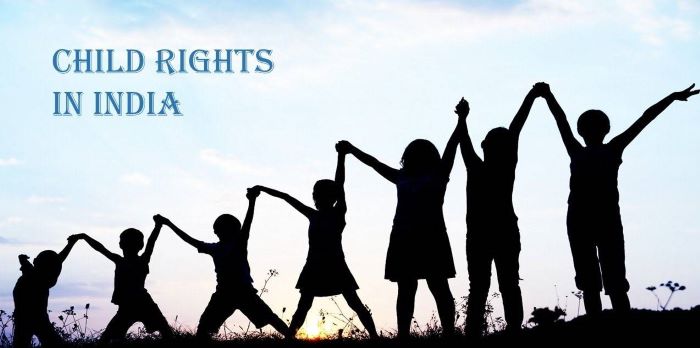
By Amitabh Srivastava, Edited by Adam Rizvi, The India Observer, TIO: Last week, I attended a gathering of some of India’s sharpest minds in New Delhi to deliberate on the threats and challenges confronting the protection of child rights in the country. The occasion was a conclave organised by the Prayas JAC Society in collaboration with the India Habitat Centre on “Juvenile Justice, Child Protection & Child Rights and the Role of Civil Society Organisations (CSOs).”
The two-hour discussion brought together nearly 100 policymakers, law enforcement officials, judicial authorities, child rights advocates, academics, and civil society representatives. Participants included officials from the Women and Child Development Department (Government of NCT of Delhi), Delhi Police, Indian Police Foundation, National Crime Records Bureau (NCRB), Bureau of Police Research and Development, Child Welfare Committees (CWC), Juvenile Justice Boards (JJB), and several academic and research institutions.
Monday Musings: UNCRC is the Geeta,Quran and Bible of Child Rights
As Dr. K. G. Suresh, Director of the India Habitat Centre, remarked while concluding the programme, he was pleasantly surprised that participants remained fully engaged for over two hours, even as other venues had wrapped up early due to the cold wave gripping the city.
Setting the context for the discussion, Amod K. Kanth, Founder and Mentor of Prayas, explained that the Juvenile Justice Act, 2015 was India’s response to its commitment under the United Nations Convention on the Rights of the Child (UNCRC), the world’s largest human rights treaty signed by 196 countries, including India. He described the Act as a distinct, child-centric legal framework addressing children in conflict with law, children in need of care and protection, and child victims of crime.
Kanth noted that while India possesses a strong constitutional, legal, and international framework for child protection, its effectiveness hinges on robust coordination among institutions and civil society. Reiterating Prayas’ long-held position, he cited NCRB data to underline that crimes committed by children form a very small proportion and are often exaggerated in public discourse, whereas crimes against children—particularly under the POCSO Act—are on the rise.
Syed Ali Mujtaba invited to discuss ‘Safeguarding Children in India’s AI Future.’
Prominent child rights advocate Anant Asthana highlighted the urgent need for capacity building, pointing out that barely 40,000 functionaries currently serve within the juvenile justice system. Sanjay Kundu, IPS (Retd.), former DGP of Himachal Pradesh, stressed that effective child protection requires strong political will and cautioned against a one-size-fits-all approach. Dharm Chand Jain, COO of the India Police Foundation, drew attention to the immense pressures faced by police handling crimes involving children, observing that NCRB data reflects only a fraction of actual cases. He underscored the need for greater sensitisation, institutional support, and collaboration between the police and civil society.
Participants spoke candidly about ground-level challenges and proposed practical solutions within the child protection ecosystem. Emphasis was placed on strengthening both institutional and non-institutional care, expanding rehabilitation and education programmes for juveniles, and ensuring effective aftercare mechanisms.
Jack Ciattarelli Voted to Give Rapists Parental Rights, Blocked Key Protections for Survivors
Concluding the discussion, Mrs. Rashmi Singh, Secretary, Women and Child Development Department, Government of NCT of Delhi, stressed that strengthening the child protection system is non-negotiable. She highlighted the urgent need for enhanced institutional capacity, adequate remuneration for skilled personnel, and improved support for both institutional and non-institutional care, including sponsorship programmes.
What emerged most prominently from the conclave was the collective call to insulate the juvenile justice system from the regular criminal justice system meant for adult offenders.
For me, the discussion served as a sharp reminder—particularly when contrasted with the world’s most powerful democracy. The United States remains the only UN member state that signed the UNCRC in 1995 but has yet to ratify it. A country whose leadership frequently claims moral authority on democratic values and does not hesitate to intervene abroad has a troubling record when it comes to the rights of its own children.
Monday Musings: Children are dispensable if they are poor
According to experts, one consequence of the absence of a comprehensive, separate legal system for children in the U.S. is that minors often lack clear legal standing in courts. While India has launched a nationwide campaign against child marriage under the leadership of its Minister for Women and Child Development, Mrs. Annapurna Devi, several U.S. states still have no minimum legal age for marriage. As a result, children in such marriages cannot even seek divorce until they turn 18.
Furthermore, children in the U.S.—including infants and adolescents—can be denied life-saving medical treatment due to parental religious beliefs. The UNCRC’s guarantees relating to education, healthcare, juvenile justice, and the rights of children with disabilities remain unfulfilled for American children, even as the country celebrates slogans like Make America Great Again.
Hundreds of children, some as young as 11, are incarcerated in adult prisons in the U.S., serving sentences of up to 20 years—an outcome unthinkable in a system with a robust juvenile justice framework like India’s. Despite half-hearted attempts by previous administrations to regulate firearms, the gun lobby—funded across party lines—remains so powerful that children often receive guns as birthday gifts.
And, as we all know, a real gun kills—and that, undeniably, is a crime.
Also Read more from this Author: Monday Musings: Prayas has its Thanks Giving day, courtesy Amod K Kanth
Curated by Humra Kidwai
Articles written by contributors have different viewpoints. The views expressed in the articles are the author’s own and not necessarily supported by TIO, The India Observer its affiliates, staff, or the management. Our Articles can be reproduced, with the following conditions, (1) No alteration to the content, (2) Visible, and full credit is given to the Author & Editor. (3) Citing, The India Observer, TIO. In the case of online or electronic media, a link to the original article must be given. Rules are strictly enforced. Any questions, email the Editor at: Mediaiss@gmail.com Or TheIndiaObserver@gmail.com


