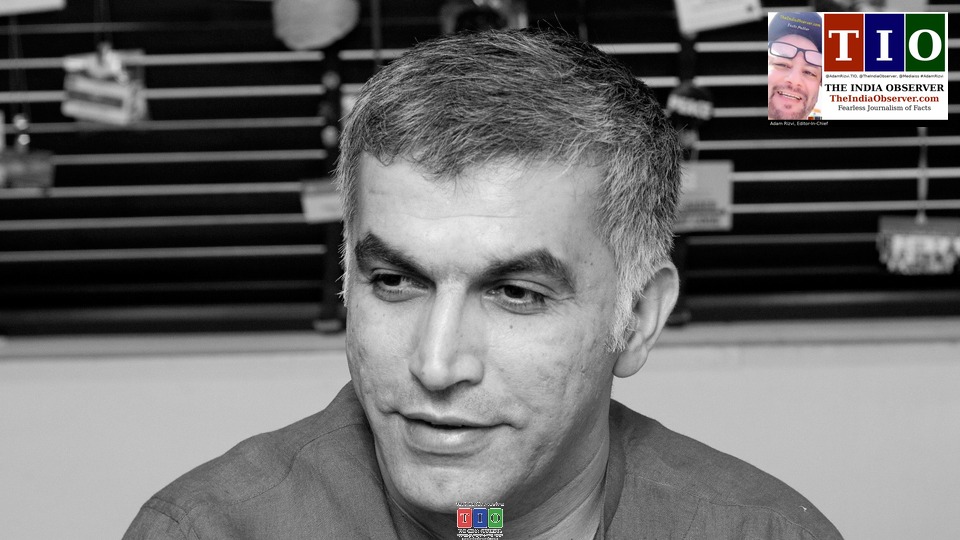
Nabeel Rajab, Bahraini Human Rights Defender and Voice of the Arab Spring, Dies at 62
A Life Dedicated to Freedom, Democracy and Human Rights
Nabeel Rajab, one of Bahrain’s most prominent human rights defenders and a leading voice of the 2011 Arab Spring pro-democracy movement, died on November 17, 2026, in Türkiye. He was 62.
His death marks the loss of a prominent figure in the international human rights movement, whose decades-long advocacy brought worldwide attention to political repression, freedom of expression and the treatment of dissidents in Bahrain.
According to the Associated Press, Rajab was found unresponsive at his family’s home in Türkiye on Tuesday morning. His wife and daughter took him to a hospital in Istanbul, where he was pronounced dead. Ebrahim Sharif, an activist and family friend, said relatives believed he may have suffered a heart attack.
A Voice for Human Rights in Bahrain
Born on September 1, 1964, Rajab began his human rights activism during the 1990s. In 2000, he co-founded the Bahrain Human Rights Society, one of the country’s early human rights organizations.
In 2002, he helped establish the Bahrain Centre for Human Rights (BCHR), subsequently serving as its president. The organization became an important platform for documenting alleged abuses and advocating democratic reforms and fundamental freedoms.
Rajab also held leadership positions in regional and international human rights organizations, including the Gulf Centre for Human Rights and the International Federation for Human Rights (FIDH).
The Arab Spring and the Price of Dissent
Rajab gained international prominence during the 2011 Arab Spring, when demonstrations calling for political reform spread across the Middle East.
In Bahrain, thousands of protesters gathered at Manama’s Pearl Roundabout, demanding greater political representation, constitutional democracy, fair elections and an end to discrimination.
Rajab emerged as one of the movement’s most recognizable voices. He continued speaking publicly about the government’s response to the demonstrations and the treatment of protesters, even as authorities intensified their crackdown.
Bahrain’s uprising was ultimately suppressed with assistance from security forces from Saudi Arabia and the United Arab Emirates.
In the years that followed, Rajab was repeatedly arrested and imprisoned over his public criticism of Bahraini authorities and comments concerning regional conflicts and alleged abuses.
In 2018, he received a five-year prison sentence over tweets criticizing the Saudi-led military campaign in Yemen and alleging torture and mistreatment inside Bahrain’s Jaw Prison.
His detention attracted international condemnation from human rights organizations, the United Nations and other international observers.
Rajab was released from prison in June 2020 and permitted to serve the remainder of his sentence under home detention. Human Rights Watch subsequently documented concerns about the deterioration of his health during imprisonment.
Exile Did Not Silence His Advocacy
Even after his release, Rajab continued advocating for human rights and speaking about political repression in Bahrain and elsewhere.
In 2026, he left Bahrain with his family and remained outside the country. According to human rights organizations, he feared rearrest following his public criticism of the authorities and allegations concerning the treatment of a detained activist.
His departure did not end his public engagement. He continued working with human rights advocates and drawing international attention to issues affecting political prisoners and civil liberties.
Tributes to a Human Rights Defender
Following news of his death, the Bahrain Centre for Human Rights expressed condolences to his family and acknowledged his contributions.
Human Rights Watch, which had worked closely with Rajab over many years, described him as a steadfast defender of freedom of expression and democracy. The organization noted his contributions to its Middle East and North Africa work and his continued commitment despite imprisonment and exile.
The Bahrain Institute for Rights and Democracy also paid tribute to Rajab, recognizing his role in bringing international attention to human rights concerns in Bahrain.
His work extended beyond the borders of his country. For many in the international human rights community, he represented the determination of individuals who continue to speak out even when doing so carries substantial personal consequences.
A Legacy That Extends Beyond Bahrain
The Arab Spring raised hopes for democratic change across the Middle East, but its outcomes varied significantly from country to country. Bahrain’s 2011 uprising and its aftermath remain an important chapter in that history.
Rajab’s life reflected the challenges faced by human rights defenders working in environments where public criticism can lead to imprisonment, restrictions and exile.
His passing is a reminder that the struggle for freedom of expression, accountability and human dignity is not confined to one country or one generation.
Nabeel Rajab leaves behind a legacy of advocacy, international solidarity and an enduring commitment to speaking for those whose voices are often unheard.
The India Observer extends its condolences to his family, friends and colleagues in the international human rights community.
Sources
- Index on Censorship – Nabeel Rajab obituary: https://www.indexoncensorship.org/2026/11/nabeel-rajab-obituary/
- Gulf Centre for Human Rights – Condolences on the death of Nabeel Rajab: https://www.gc4hr.org/condolences-on-the-death-of-nabeel-rajab-one-of-the-worlds-leading-human-rights-defenders/
- No Peace Without Justice – Bahrain: No Peace Without Justice celebrates the life of Nabeel Rajab (1964–2026): https://www.npwj.org/press-release/bahrain-no-peace-without-justice-celebrates-the-life-of-nabeel-rajab-1964-2026/