Dhurandhar and the Rewriting of History: When Bollywood Crosses From Storytelling Into Political Messaging
Share, Comment, Like, and Subscribe to support Independent Journalism!
By Adam Rizvi Editor-in-Chief, The India Observer, TIO: Bollywood has always taken creative liberties, but Dhurandhar raises a more serious concern—the deliberate distortion of documented national security history to construct a politically convenient narrative.
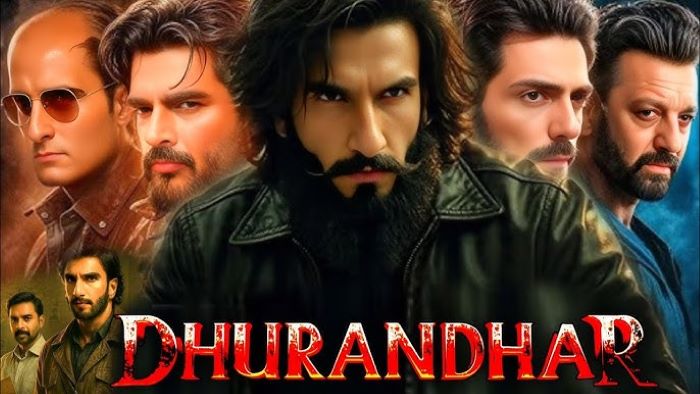
The film is technically impressive. Its cinematography, action choreography, editing, sound design, and performances—particularly by R. Madhavan, Akshaye Khanna, Ranveer Singh, Sanjay Dutt, and Arjun Rampal—are undeniably strong. As a spy thriller, Dhurandhar is gripping, intense, and expertly packaged for mass appeal.
But strong craft cannot excuse historical manipulation.
A detailed public critique by Arun Arya, a senior Indian Administrative Service (IAS) officer, highlights how the film systematically misrepresents real events and official roles, collapsing decades of complex intelligence history into a single glorified figure to advance a political worldview.
Also Read, Tweet & Share: Movie ‘HAQ’, based on the Shah Bano Case, Sparks Controversy
The film’s protagonist, Ajay Sanyal—clearly modeled visually and narratively on India’s current National Security Advisor Ajit Doval—is portrayed as the Intelligence Bureau Director during multiple defining moments in India’s counter-terrorism history. This portrayal is factually incorrect.
Established records show:
-
During the 1999 Kandahar hijacking, Ajit Doval was a senior Intelligence Bureau officer and negotiator—not the IB Director. That position was held by Shyamal Dutta.
-
At the time of the 2001 Parliament attack, Doval was serving at IB headquarters in Delhi, again not as Director.
-
During the 2008 Mumbai terror attacks (26/11), Doval had already retired from the Intelligence Bureau in 2005 and was heading the Vivekananda International Foundation, a think tank, with no official government role.
Also Read, Tweet & Share: Intermission in the horror movie
By erasing these timelines, Dhurandhar creates a fictional super-official, omnipresent across decades, quietly “waiting” for the arrival of the “right leadership” to finally act decisively. The implication is unmistakable: previous governments—across political parties—were weak, compromised, or indecisive, while the current hardline approach alone delivers results.
This is not neutral storytelling. It is ideological framing.
The film reinforces its message through overt jingoism, selective portrayals of terrorism, and dialogue designed to provoke applause rather than reflection. Complex security challenges are reduced to simplistic binaries of strength versus weakness, patriot versus traitor—leaving little room for institutional nuance, democratic oversight, or historical truth.
Also Read, Tweet & Share: Indian Cinema: A Growing Trend of Anti-Muslim Hate Movies
Cinema has the power to shape public memory. When real events and real individuals are involved, misrepresentation does not remain harmless entertainment—it becomes narrative conditioning. When history is bent repeatedly in one ideological direction, the result is not artistic freedom but soft propaganda.
Importantly, this critique does not argue against watching the film. Dhurandhar is engaging and technically accomplished. But audiences deserve honesty. They deserve to know where history ends and fiction begins.
In a democracy, art should challenge power—not quietly reinforce it through distortion.
Also Read, Tweet & Share: After ‘The Kerala Story,’ it is “Farhana” that’s an anti-Muslim movie
Editorial Disclosure:
The factual observations referenced in this article are drawn from a public social media post by Arun Arya, IAS, shared in his personal capacity. They are presented here in the interest of public discussion on cinema, history, and democratic accountability.
Reader Call to Action
Have a story, event, or issue to report? Email your press release or tip to TheIndiaObserver@gmail.com — TIO covers news that matters.
Curated by Humra Kidwai