13 Years of the Indian Spring: Remembering Nirbhaya and the Awakening of a Nation
You are Here: Tweet, Like, Share, Comment, Subscribe…be the Voice of Free Press!
By Amitabh Srivastava, Edited by Adam Rizvi, The India Observer, TIO: Rewatching Delhi Crime Season One today reopened memories that time has not dimmed. The series revisits the horrifying events of December 16, 2012, when a young medical student, Jyoti Singh, was gang-raped by six men in a moving bus in New Delhi. Her male companion was brutally assaulted, and both were stripped and thrown onto the streets on a bitter winter night.
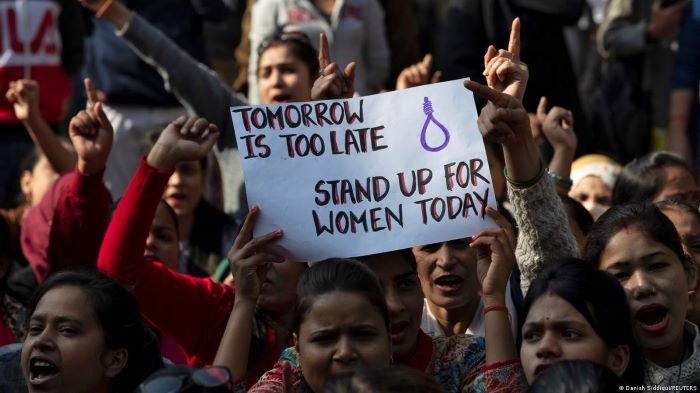
The brutality of the crime shook India to its core. What followed was unprecedented. Across cities and campuses, students, women, and ordinary citizens poured onto the streets, holding candlelight marches and demanding justice. It was not orchestrated, it was instinctive—an eruption of collective conscience.
Also Read, Tweet & Share: Taslim Jahan, Rape and Murder Case Go Unsung
At the Boat Club near India Gate, school and college students faced lathi charges and water cannons. Many were detained, dragged into police buses. Some lay beneath those buses, deflating tyres in desperate defiance. The images were raw, chaotic, and unforgettable.
For once, politicians were kept firmly at bay. The movement belonged to the people, and the people guarded it fiercely. Even the then Chief Justice of India remarked that had he had a young daughter, he would have permitted her to join the protests.
I have often called this uprising the Indian Spring, akin to the Arab Spring that once shook Egypt and the wider world—a spontaneous revolt against injustice, patriarchy, and institutional apathy.
Also Read, Tweet & Share: Movie ‘HAQ’, based on the Shah Bano Case, Sparks Controversy
At the time, I was working with Sahara Time weekly. On the morning the crime dominated newspaper headlines, I went to my editor, Mayank Mishra, and said quietly, “Today, I feel as ashamed of being a Delhite as I did in October 1984.” Some wounds reopen history.
Yet Nirbhaya—as the media named her—did not suffer in vain. The Justice J.S. Verma Committee, constituted soon after, undertook an extraordinary exercise. Consulting jurists, activists, and experts across disciplines, it redrafted India’s sexual assault laws with urgency and integrity. The result was the Criminal Law (Amendment) Act, 2013—widely known as the Nirbhaya Act.
That year also saw the creation of the Nirbhaya Fund by then Finance Minister P. Chidambaram, a rare instance where policy followed public outrage with tangible institutional support. The fund continues to exist, a reminder of what public pressure can achieve.
Also Read, Tweet & Share: Monday Musings: Women take over Prayas and no one minds
December holds personal significance for me as well. In 2013, Sahara Time shut down abruptly. At a professional crossroads, I called an old friend from my cub-reporting days at The Hindustan Times—Amod K. Kanth, IPS—who had left the police service to devote himself fully to Prayas, an NGO working with vulnerable children and marginalized communities.
He asked me to join immediately, to document and disseminate the vast work Prayas had been quietly doing for decades. That association, born of uncertainty, has endured since 2014—one of the most meaningful chapters of my life.
Then, last year, December 16 delivered another quiet miracle.
Also Read, Tweet & Share: A Steep Rise in Child Marriages in India: Will the Pandemic Strengthen more Societal Pressures for Women?
As I do every year, I wrote a Facebook post remembering Nirbhaya and promptly forgot about it. By mid-afternoon, I received a message from Adam Rizvi, editor of The Indian Observer, published from New Jersey, seeking permission to reprint the piece.
We spoke. He said he discovered my writing through mutual friends on Facebook. He invited me to write regularly—on any subject I wished—trusting my voice and ethics.
December 16, 2025, marks one year of that collaboration. Since then, my Monday Musings have appeared regularly—unedited, unfiltered—on subjects ranging from the uncomfortable to the unconventional. If some weeks are missing, the blame lies solely with my own inertia.
Looking back at these columns surprised even me. Which mainstream newspaper would carry an article on senicide—the practice of killing elderly family members—still prevalent in parts of the world, including India?
One Indian newspaper owner reacted in disbelief: “But we worship our elders.” He did not know that in parts of Tamil Nadu, this ritual survives in the form of administering fatal overdoses of coconut water to the aged.
Also Read, Tweet & Share: Crescendo of Caring: Friends of Prayas Hosts Successful Holiday Event to Brighten Christmas for Local Children
In North India, the method is subtler: elders are smothered with respect, while being denied wages, autonomy, and dignity.
Other musings have explored the language of whales, environmental stress leading to divorces among birds, and, inevitably, gender injustice and child protection laws—causes Prayas continues to defend relentlessly.
This year brought another moment of quiet validation: the formation of the first Friends of Prayas group in New Jersey.
At 75, with limited physical mobility, I cannot fully explain what this outlet of expression—what the Greeks called catharsis—means to me. Perhaps it is survival. Perhaps it is gratitude. Perhaps it is simply the need to bear witness.
Also Read more from this Author: Monday Musings: That makes three in a (death) row
Curated by Humra Kidwai
Articles written by contributors have different viewpoints. The views expressed in the articles are the author’s own and not necessarily supported by TIO, The India Observer its affiliates, staff, or the management. Our Articles can be reproduced, with the following conditions, (1) No alteration to the content, (2) Visible, and full credit is given to the Author & Editor. (3) Citing, The India Observer, TIO. In the case of online or electronic media, a link to the original article must be given. Rules are strictly enforced. Any questions, email the Editor at: Mediaiss@gmail.com Or TheIndiaObserver@gmail.com